
What Barry Bonds Actually Taught: 4 Drills Players Still Talk About
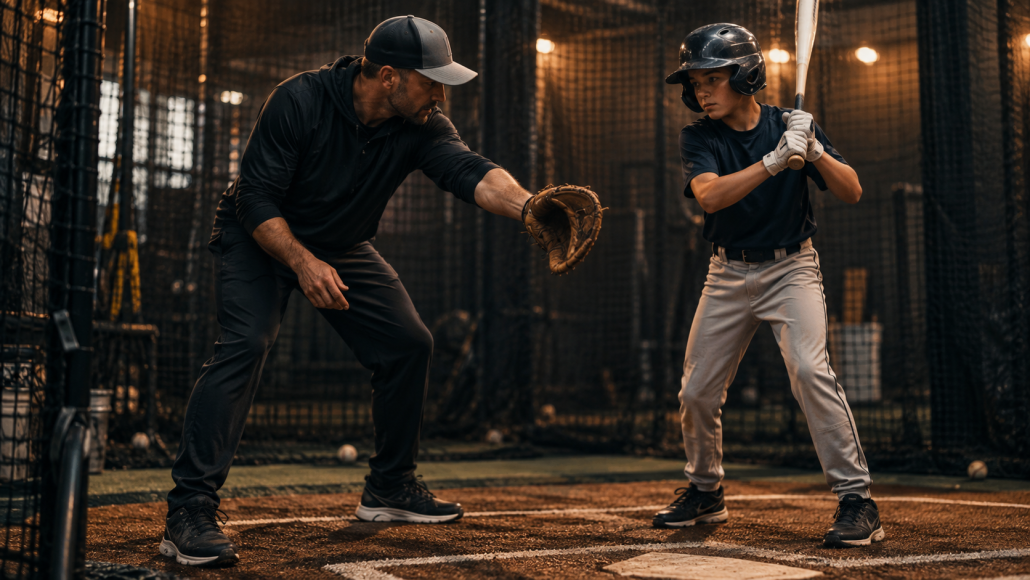
The Barry Bonds drill everyone talks about is the one he ran with Christian Yelich in 2016 — but it is one of four distinct Barry Bonds hitting drills that coaches and players have documented over his career. Bonds is the all-time home run leader with 762 home runs and a .607 on-base percentage that may never be matched, and he is widely regarded as the most complete hitter the game has ever seen. When he coached, players paid attention. This post breaks down every major Barry Bonds drill — including the famous Yelich backspin drill, the Catch Drill he used with Giants players, the eye speed machine drill, and his philosophy on grip and top-hand use — so you can apply what he actually taught.
What the Barry Bonds video above is actually showing you
The video compares Barry Bonds’ swing to a youth hitter named Alex, and the difference comes down to one cue: Bonds gets shorter when his front foot lands. Watch the line drawn at the top of his head at load — then watch his head drop as the front heel hits the ground. That’s not a flaw. That’s intentional. Bonds lowers his backside and lets the front side straighten out to get his front hip out of the way, which puts the barrel on the upward plane of the incoming pitch.
Alex, by contrast, stays short through the load but then stands back up the moment he starts to swing. His head rises and his nose pulls out — the body compensating with the upper body instead of staying short through the turn. The result is that he has to get on plane with his hands, which is inconsistent, rather than with his body, which is repeatable.
The drill in the video — the lane drill — uses an exercise band looped under the hitter’s armpits and attached to a chain link fence. The band pulls them forward into landing position. Then the hitter pulls hard back against it and gets shorter, bending the back leg and staying low through the turn. It trains the body to get on plane automatically, without a verbal cue.
This “get shorter” mechanic is the foundation everything else Bonds taught is built on. Additionally, it connects directly to the four drills below — especially the Yelich Backspin Drill, where the wide stance and the chopping sensation create that same lowered, body-on-plane position through contact. The body getting shorter is what generates the leverage; the short bat path delivers it.
What makes Barry Bonds’ hitting drills different from standard coaching?
Most hitting drills target a single mechanical fix. Additionally, they are often built around a cue — “squish the bug,” “stay back,” “keep your hands inside the ball” — that works for some hitters and confuses others. Barry Bonds’ drills are different because they are built around feel and feedback, not verbal cues. Each drill creates a sensation the hitter can self-monitor in real time, which is why the players who worked with Bonds almost universally describe the same experience: they felt something click immediately.
Brandon Crawford, after working with Bonds during a 2014 Giants spring training session, described it simply: “Everything I heard him talk about this morning [regarded] keeping your swing as simple as possible. And he explains it in the simplest ways.” That principle — simple, feel-based, self-correcting — runs through every Barry Bonds drill below.
Barry Bonds Drill #1: The Catch Drill (barrel awareness and contact points)
The Catch Drill is the Barry Bonds hitting drill that best captures his core philosophy: if you can catch the ball, you can hit the ball. Bonds used this drill extensively during his 2014 guest instructor stint with the San Francisco Giants and again with various players throughout his Marlins coaching tenure.
How to run the Catch Drill:
- The hitter puts a glove on their top hand — the back hand (right glove if you’re left-handed, left glove if you’re right-handed).
- The coach or a machine tosses balls to different locations: inside, middle, outside.
- The hitter catches each ball in their normal hitting stance without swinging.
- Progression: start with underhanded tosses at close range, then graduate to a pitching machine at reduced velocity.
Bonds’ teaching cue was direct: “If I can catch it with my glove, then I can catch it with my bat.” The goal is barrel awareness — feeling exactly where the bat barrel needs to be for pitches at each location. An inside pitch is caught out front; an outside pitch is caught deeper and closer to the body. Most hitters who struggle with bat drag are trying to meet every pitch at the same contact point. The Catch Drill eliminates that instantly by making the contact point tangible.
This is also why Bonds consistently had elite opposite-field power — he understood, at a deep mechanical level, that the outside pitch requires a later, deeper contact point and that trying to pull it creates weak contact or rolling grounders.
Barry Bonds Drill #2: The Yelich Backspin Drill (bat path and contact)
This is the most famous Barry Bonds hitting drill, documented in detail by Christian Yelich on the Sequence podcast with Trevor Plouffe. The session took place in July 2016 when Bonds was the Marlins’ hitting coach and Yelich was struggling to turn his barrel path into consistent hard contact. Yelich called the batting practice session that followed “the best of my entire life.”
How to run the Yelich Backspin Drill:
- Take a wide, stable stance — wider than your normal setup.
- Have the pitcher (or machine) throw the ball so you make contact right off the front of the plate — the ball should land its first bounce a few feet in front of home plate.
- Hit 3-5 pitches at that contact point. Focus on the sensation — it should feel like you are chopping down on the ball.
- Move the contact point out: now hit the ball 6-7 feet out front. The first bounce moves forward accordingly.
- Continue working the contact point out gradually, raising the trajectory toward line-drive level.
Here is what Yelich said about the drill: “I still had that chopping feeling, but you’re not actually steep. Your path is just so short and cleaned up. It was his way of cleaning up his bat path when he played.”
The result Bonds was after: true backspin. A hitter who catches the bottom half of the ball with a clean, short path creates backspin that carries — to the opposite field, up the middle, or pull side. Yelich described the outcome perfectly: “opposite field: backspin missile. Up the middle: backspin missile. Pull side: backspin missile.”
This drill connects directly to what we teach at HPL about swing plane and barrel path — the bat has to match the plane of the pitch to produce consistent backspin. The Yelich drill creates that feeling progressively rather than through verbal instruction.
After that session, Yelich’s home run rate nearly doubled for the rest of the 2016 season. He went on to win back-to-back NL MVP awards in 2018 and 2019.
Barry Bonds Drill #3: The Eye Speed Machine Drill (vision and visual tempo)
Barry Bonds had arguably the best plate discipline in baseball history — he averaged 2.28 walks per strikeout in his prime years. A big part of that was his ability to see the ball early and read its location and movement. To train that visual tempo, Bonds used a progression drill on the pitching machine.
How to run the Eye Speed Machine Drill:
- Set the pitching machine to a challenging velocity — harder than the hitter is comfortable with.
- Hit 3-5 pitches at the normal hitting distance.
- Take one full step toward the machine and hit 3-5 more pitches.
- Take another step forward. Repeat for 4 steps total.
- Return to the original distance and take several swings.
Each step reduces the time the hitter has to react, which compresses the visual window and forces the brain to pick up the ball earlier out of the release. Therefore, when the hitter returns to the original distance, the pitch looks slower and the ball looks larger. This is the same principle behind overload/underload training for bat speed — you stress the system beyond normal load, then return to normal load and it feels easier.
For youth hitters, this drill should be run at an appropriate age-level velocity — the goal is a meaningful challenge, not danger. A 10U hitter using a machine set to 55 mph stepping up toward 45-50 mph gets the same visual stress adaptation as a professional stepping toward a machine set to 85+.
This approach to pitch recognition and timing is one of the most underrated aspects of elite hitting development.
Barry Bonds Drill #4: The Bullpen Catch Drill (picking up release early)
This is the simplest Barry Bonds drill and arguably the most transferable. Bonds would grab a fielder’s glove and step into the catcher’s spot during a pitcher’s bullpen session — not to catch, but to train his eyes to find the ball out of the pitcher’s hand as early as possible.
The goal was not pitch recognition in the traditional sense (breaking ball vs. fastball). The priority was the visual moment of release — seeing the ball leave the fingertips at the same instant the arm fires through. Bonds believed that elite hitters read release, not spin. By the time you can identify the spin, it is too late to make a mechanical adjustment.
This drill is easy to replicate at any level: have the hitter stand behind the backstop or in the batter’s box without a bat while the pitcher throws a full bullpen. The job is to call the pitch location before it crosses the plate — but the real training is the habit of locking the eyes onto the release point from the very first frame of the arm action.
What did Barry Bonds teach about bat grip and choking up?
Barry Bonds’ bat grip approach is frequently misunderstood. He used a 34-inch, 31.9-ounce Sam Bat — and he choked up on it, typically 1-2 inches. This is the opposite of what most power hitters do. The conventional wisdom is that you hold the bat at the knob to maximize the bat’s lever length and, therefore, power. Bonds rejected that logic entirely.
For Bonds, choking up was about barrel control — the ability to get the barrel where it needed to be, on time, without compensating with the upper body. A hitter who cannot control the barrel will drag it, roll over, or get beaten on the inner half. By shortening the effective length of the bat, Bonds gave himself the ability to respond to any pitch location with the barrel, not with his body mechanics.
This connects to what he told Brandon Crawford during the 2014 Giants spring training: “Your hands are fast enough to get to an inside pitch. You don’t need to cheat or use your body or shoulders to get to that pitch.” The choke-up supported that — it kept the hands in control without the hitter having to do anything extra with the body to accelerate the barrel.
Most youth hitters are taught to choke up only with two strikes. Bonds treated it as a permanent setup feature, not a defensive adjustment. For hitters who fight top-hand issues or bat drag, experimenting with a small choke-up as the primary grip is worth a few rounds of batting practice.
What did Bobby Bonds tell Barry about the downswing?
Barry Bonds has spoken publicly about his father Bobby Bonds’ instruction throughout his childhood. The central piece of advice Bobby gave him: perfect your downswing, because swinging up is easy.
This sounds counterintuitive in 2026, when launch angle optimization is central to most hitting conversations. However, Bonds — and Yelich after working with Bonds — was not literally swinging down on the ball. The teaching was about bat path direction through the zone, not about launch angle outcomes. As Yelich described it, you get that “chopping feeling” but you are not actually steep — the path is short and tight, and the result is backspin and hard contact, not ground balls.
Specifically, Bobby Bonds emphasized the top hand as the driver of that short, down-path direction through the zone. “Get the top hand through” was the cue — top hand leading the barrel from slot to contact, rather than the bottom hand casting or the front side opening early. This is exactly what the Catch Drill and Yelich Backspin Drill train: a short, tight path where the top hand drives the barrel to the ball rather than letting the barrel drag behind the hands.
The relationship between the downswing philosophy and the barrel staying on plane is why Bonds had elite contact ability alongside his power — he was not choosing between contact and power, he was using the same path for both. For more on how barrel plane affects both outcomes, see our breakdown of launch angle and exit velocity in context.
How can youth baseball and softball hitters apply Barry Bonds drills?
Youth hitters can run all four Barry Bonds drills with simple modifications. The Catch Drill works at any age — a tennis ball or foam ball reduces the risk if you are working with very young hitters, and underhand tosses make it accessible at 6U. Additionally, the Yelich Backspin Drill scales well: adjust the starting contact point to match the hitter’s stride length and timing.
The Eye Speed Machine Drill is the one to use most carefully with youth athletes — start at a velocity that is genuinely challenging but not so fast that the hitter is flinching. A good rule is to use the maximum comfortable velocity and then step 6-12 inches closer rather than a full stride, especially for hitters under 10. The visual stress happens immediately; you do not need to be dangerous about it.
The most transferable Bonds insight for youth hitters, however, is the choke-up. For softball hitters in particular, many coaches resist the choke-up because it “looks weak.” Bonds disproved that thinking — he hit 762 home runs while choking up on a 34-inch bat. Barrel control creates power by eliminating the compensation patterns that bleed force at contact.
For hitters who also struggle with dropping the hands, the Yelich drill is particularly effective because the short contact-point start forces the hands to stay level — there is no room for a downward loop when you are trying to put the ball 6 feet out front.
Ready to fix the barrel path beyond what drills alone can do?
Grab the free Barry Bonds Hitting Tips Cheat Sheet — all 4 drills on one printable page, plus the body-on-plane mechanic from the video above.
More Free Resources from HPL
Frequently Asked Questions: Barry Bonds Drills and Hitting Tips
What is the Barry Bonds drill that changed Christian Yelich’s career?
The Barry Bonds drill that changed Yelich’s career is the Backspin Drill, run during a July 2016 batting practice session when Bonds was the Marlins’ hitting coach. Bonds had Yelich start by hitting balls off the front of the plate, then progressively move the contact point outward — 6 to 7 feet, then to line-drive level. The drill created “true backspin” by cleaning up Yelich’s bat path. Yelich described the result as hitting “backspin missiles” to all fields and called it the best batting practice of his life. His home run rate nearly doubled for the rest of that season.
What is the Barry Bonds Catch Drill?
The Barry Bonds Catch Drill has the hitter wear a fielder’s glove on their top (back) hand and catch pitched balls in their normal hitting stance — without swinging. Bonds started with underhanded tosses and progressed to a pitching machine. The drill teaches the hitter where the barrel needs to be for inside, middle, and outside pitches. Bonds’ cue was: “If I can catch it with my glove, then I can catch it with my bat.” It is one of the best barrel-awareness drills ever documented because it gives instant, tangible feedback on contact points without any verbal instruction.
What was Barry Bonds’ bat grip — did he teach a specific grip?
Barry Bonds used a 34-inch, 31.9-ounce Sam Bat with a choke-up of 1-2 inches. He taught barrel control over grip mechanics — the choke-up was his way of keeping the barrel responsive at every pitch location without needing to compensate with the upper body. He told Brandon Crawford that “your hands are fast enough to get to an inside pitch — you don’t need to cheat or use your body or shoulders.” He did not advocate a specific knuckle alignment; the emphasis was on holding the bat in the fingers (not the palm) for maximum control, and shortening the lever when needed to keep the barrel under command.
Did Barry Bonds teach a tee drill?
The Yelich Backspin Drill is functionally similar to a tee drill — it starts with contact made right off the front of the plate, essentially a ground-level tee placement, and works outward from there. Bonds would have the pitcher throw or use a machine rather than a stationary tee, but the contact-point progressions are the same principle a tee drill uses. The key difference is that a live throw or machine adds timing, which Bonds believed was essential — the feel of the short, clean path had to survive a moving pitch, not just a stationary ball.
What was Barry Bonds’ top-hand philosophy?
Barry Bonds was a strong advocate for the top hand driving the barrel through the zone. His father Bobby Bonds’ instruction — “perfect your downswing” — translated into the top hand leading the barrel from slot to contact with a short, direct path. Bonds believed the top hand should be the engine of the swing, not the lead hand casting or the front side pulling. This philosophy is visible in his swing mechanics: minimal casting, tight to the body, top hand delivering the barrel on time regardless of pitch location. The Catch Drill and the Yelich Backspin Drill both reinforce this top-hand-led approach.
What did Bobby Bonds tell Barry about swinging down?
Bobby Bonds told Barry to perfect his downswing because, in Bobby’s words, it is easy to swing up. This was not an instruction to hit ground balls — it was about bat path discipline. A downward-directed path through the hitting zone stays short and tight, generates backspin, and keeps the barrel in the zone longer than a path that casts or loops. The Yelich Backspin Drill shows exactly what Bobby meant: Yelich described the “chopping feeling” but noted that the ball came off as line-drive backspin missiles, not grounders. The swing feels down but the contact outcome is a hard, carry-heavy line drive.
Can youth baseball and softball hitters use Barry Bonds drills?
Yes — all four Barry Bonds drills work for youth hitters with basic modifications. The Catch Drill works at any age; use a tennis ball or soft toss for very young hitters. The Yelich Backspin Drill scales to any level by adjusting the starting contact point and using age-appropriate pitching. The Eye Speed Machine Drill should use challenging but safe velocity — step 6-12 inches closer rather than a full stride for hitters under 10. The choke-up approach is especially valuable for youth athletes who struggle with barrel control on inside pitches or bat drag on balls away. Bonds’ drills are sensation-based, which makes them self-correcting at any skill level.

With 28,000+ online bat speed program sales, my methods have transformed coaches, instructors, and parents just like you. I'm affiliated with esteemed organizations like ABCA, IYCA, and SABR, advocating for positive coaching. With 15+ years in corrective fitness and a Division One baseball background, my knowledge is unmatched.
Join our blog and unlock the secrets to successful hitting, elevate your performance, and ignite your passion. Welcome to the world of limitless possibilities at HittingPerformanceLab.com.
- The Season Started. Here’s The Program That Keeps Your Daughter Athletic Through All Of It - September 27, 2026
- The Season Started. Here’s The Program That Keeps Your Kid Athletic Through All Of It - September 27, 2026
- Baseball Pitcher Workout Program PDF: Free 12-Week Off-Season Strength Plan for HS and Youth Pitchers - September 26, 2026



I showed Alex the video and article. He seemed to really absorb all you said in it. Thanks for all you do for all these kids. Keep up the great work.
Thanks Sheri! If he consistently works on it, then he’ll start getting more consistent with his long drives.
This is the funniest thing i have ever heard of. They hit home runs after seeing you one time. I was at the tournament, not to take anything away from the boys, because they did play very well. The fences were very short and the competition was Average. I hit with the young man you talked about, Ben. He has had a very fundamentally sound swing for some time now. I follow your website and think you do a good job instucting the boys. But please dont act like after one lesson you can turn a player into a homerun hitter.
Jeff, first off these results are not typical, and I’ll add that in the post. Some of my players “get it” quicker than others, and as you pointed out, this may happen if they already have a few science ingredients mixed into their swing recipe. All three boys mentioned in the article (Ben, Paul, and Dylan), all had forward momentum naturally working for them, before me. And to the naked eye, their swings did look sound, but under video analysis, all three bled force at impact because of very slow and long turns. We worked on getting them tighter in their Final Turns.
Let’s be honest Jeff, you are taking away from the boys. You know how hard it is to hit, regardless of quality pitching and shorter fences. At Fresno State, sometimes we’d crush great pitching and sometimes we’d lose against terrible pitchers. Sometimes we’d hit zero home-runs at a field with a shorter porch. Sometimes we’d hit multiple dingers with deeper than average dimensions. I appreciate the gut-check Jeff and I do apologize for sounding like those other blowhards online. I’ll be more careful with my words next time.
Joey, Im definitely not taking anything away from the boys. Like i said, they played really well. i just posted that after one lesson you dont become a homerun hitter. I have been lucky to have played for some of the best hitting coaches in the game today. And i know the amount of time it takes to become a succssful hitter. Im not here to put you down, i think the Science you bring to hitting is great. I just know it takes more than a team lesson for a individual to take it all in and apply what they have learned. Best of luck to your business, and the Sliders Black. They are coached very well and are a good group of young men.
Hey Jeff, I appreciate the comment. I’ve revised the article to reflect better wording. I agree, you cannot master hitting a ball with consistent power after one session, I’m sorry I came off that way. It depends on three things: 1) Skill specific human movement science, 2) Sticky coaching cues, and 3) Follow through (constant feedback). Coach Justin Karr has also been working the system I use religiously, at practice, over the past year. And their ongoing developmental success is a testament to how he’s steering the ship. Thanks again and no hard feelings.
Jeff obviously wants everyone to know that he played for some of the best Hitting coaches on earth and that he is more knowledgeable than you. Anyone who reads tour stuff knows you are not a guy making quick fix promises. Unless you are Jeff Bagwell, Jeff Burroughs,Jeffrey leonard, etc. , no one cares what you know. You did take away from these kids. Wat did you play college ball or minor league ball. So wat.