
5 Swing Flaws That Survive Most Baseball Hitting Lessons (And How to Fix Them)
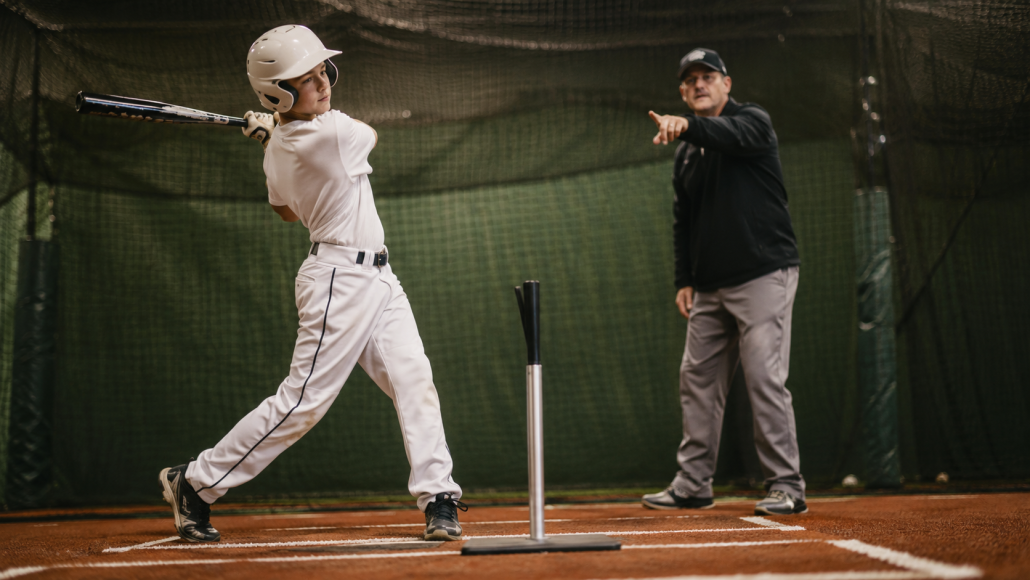
Baseball hitting lessons are worth the investment — when they target the right things. The problem is that most instruction addresses symptoms rather than causes. A coach sees a hitter pop up consistently and tells him to “keep the ball on the ground.” That’s not fixing the swing; that’s changing the intention. The mechanical pattern that caused the pop-up is still there.
Good baseball hitting lessons work through five categories in the right sequence: foundation (grip), body health (head position and low back), pitcher-exploitable patterns, the power/contact bucket the hitter is actually in, and game readiness. That sequence matters — working Category 4 drills before Category 1 is solid is like fixing the engine before checking if the car has gas. These are the same categories that the Catapult Loading System applies at the mechanical root level.
The free PDF below covers all five categories: what each one checks, why it comes in that order, and how to apply it in your own tee work. Download it and bring it to your next session.
Free Download
The 5-Category Swing Checklist — Free PDF
By Joey Myers — Creator of the Catapult Loading System · 100,000+ players trained
The exact evaluation sequence Joey uses with every new hitter: one category per page, with what to look for and how to apply it in your own tee work. Print it and use it between lessons.
What coaches and parents say about the HPL approach
“This approach offered me very simple ways to teach complex movements with hitters. Players on our summer team had an easy time understanding what they were trying to get their bodies to do. I would highly recommend this for any coach of any age at any level.”
Cody Perrin ★★★★★ — Baseball Coach
“I have 3 boys who play baseball and they are all small for their ages. I have taught them how to hit using this system and their power has really developed.”
Amazon Customer ★★★★★ — Parent of 3 baseball players
“Myers is way out front. I’ve studied hitting and coached at DI and 3 levels and this approach blew me away with what I wasn’t seeing even though it was right in front of my face.”
Dr. Tom Hanson ★★★★★ — Author of Heads-Up Baseball, DI Hitting Coach
What should baseball hitting lessons actually accomplish?
Baseball hitting lessons should isolate and correct the specific mechanical patterns preventing a hitter from making consistent, hard contact — not just give them things to think about at the plate. The five flaws below are the most common causes of weak contact, inconsistency, and power loss in hitters at every level. Good instruction identifies which of these is present, explains the mechanical cause, and gives the hitter a specific corrective drill to use between sessions so the work compounds.
If you’re wondering are baseball hitting lessons worth it, the answer is yes — provided the instruction targets root causes. Lessons that focus only on results (“stop popping it up”) without identifying mechanism produce temporary changes that dissolve under game pressure.
Category 1: Why does every baseball hitting lesson start with grip?
The foundation of the entire checklist is the top hand grip. Specifically: the bottom three fingers — pinky, ring, and middle — of the top hand. This is the first thing checked with every new hitter regardless of age or experience level, and for good reason. These three fingers connect through the forearm flexors directly to the body’s rotational engine. When a hitter grips with the top zone of the hand — palm, index finger, and thumb — the bat becomes isolated from how the body rotates. The body turns; the hands and barrel follow loosely behind, powered by arms alone.
Additionally, when grip pressure moves to the bottom three fingers, the bat is tethered to the rotational sequence. Nearly every casting and bat drag problem is made worse by the wrong grip and shows immediate improvement when the grip is corrected first — without changing anything else. This is why it comes before anything mechanical. The fix is simple: top hand only, bottom three fingers, holding the bat before each tee round. Feel the tension travel up the forearm. That’s the connection that needs to be present at contact.
What to look for and how to apply it
Ask the hitter to hold the bat with the top hand only and squeeze with only the bottom three fingers. If they automatically grip with the palm and index finger, or if the forearm doesn’t engage, the grip pattern is off. After applying the correction, the first thing hitters notice is that the barrel stays inside the ball longer without any additional cue. Ball flight usually confirms the change within 5–10 swings. Some hitters initially feel the grip is “weaker” — this resolves within one practice session as the new connection becomes familiar.
The drill: 5 reps of single top-hand grip (bottom three fingers only) before every tee session. Then take the normal two-handed grip maintaining that focus. One cue: “feel the knob through the bottom of the top hand.”
Category 2: What head position problems do good baseball hitting lessons check for?
Category 2 is the body health check — addressing it before any mechanical power work because these patterns cause physical damage over time and compromise pitch tracking on every swing. There are three head position problems and one lower body pattern to rule out.
Head yaw is the most common: the head rotates away from the contact zone before the swing is complete, so the hitter swings at where they thought the ball was. Pitchers identify this in 2–3 at-bats and attack off-speed away relentlessly. Head pitch is when the chin tilts up or down during the swing — usually down — distorting pitch-plane tracking. Common in hitters told to “stay on top of the ball.” Head roll is a lateral tilt toward the front shoulder that disrupts depth perception. Baseball hitting mechanics research supports what coaches who use video have observed: these three head position faults are among the highest-frequency issues in youth and amateur hitters — a pattern consistent with ASMI’s sports medicine research on batting biomechanics — and they’re the hardest to self-correct without external feedback.
The low back check
Beyond head position, the fourth Category 2 pattern is lumbar hyperextension — low back arching — during the rotational turn. This creates disc shear stress with every swing and accumulates over a full season of batting practice. It’s often caused by “get tall” cues or an overly aggressive early hip hinge. No mechanical work is started until this is ruled out, because training an injury-producing pattern makes it permanent. Phone video from the side at 60% speed identifies all four Category 2 patterns — they’re nearly impossible to feel from inside the swing. Bat speed drills that train correct rotational mechanics also address the low back pattern by reinforcing neutral spine through the turn.
All 5 categories are in the checklist PDF — download it free and bring it to your next session.
Category 3: Which swing patterns do pitchers and scouts exploit in baseball?
Category 3 covers the four swing patterns that a sharp pitching coach or scout can identify in 2–3 at-bats — and build an entire game plan around. Fix these and the pitch mix being thrown at your hitter changes, because the attack points are gone.
The four patterns and what pitchers do with them
Head pull: The head and eyes leave the contact zone before contact, so the hitter swings blind through an estimated point. Pitchers go off-speed away early in the count. The cue fix is “chin rides the front shoulder up through contact” — structural head retention rather than willpower alone. For a closer look at this specific pattern, the head pull fix guide covers the diagnostic process and drill progression.
Stepping out: The stride foot moves toward the pull side rather than toward the pitcher. As a result, hips open early and every outside pitch becomes a weak-contact or strikeout pitch. Pitchers go away with breaking balls. Fix: land the stride foot pointing toward the pitcher — check by drawing a chalk line from the back foot to the landing spot.
Dropping the hands: Hands move downward during swing initiation instead of staying on the pitch plane. Pitchers respond by going up with velocity. Fix: “hands to the ball” — a direct path, not a loop down then up. Extension cues like “get your arms out” make this pattern worse by encouraging a downward push away from the body.
Bat wrap: The barrel dips behind the head at load, increasing barrel travel distance so the hitter can’t get through the inside pitch quickly. Pitchers attack inside hard. Fix: at heel strike, the barrel should be perpendicular to the ground or only slightly past vertical — not sweeping back toward the catcher.
Priority order: Address head pull first — it overlaps Category 2 (yaw) and has the widest game impact. Stepping out second, because it affects every pitch location. Hands drop and bat wrap vary by hitter — fix the more pronounced one first. Online hitting coaches who use video from multiple angles can typically identify all four in a single session.
Category 4: Which power and contact bucket is your hitter actually in?
Category 4 is where most baseball hitting lessons start — and why most instruction underdelivers. Coaches see the result (no power, high strikeout rate, inconsistent production) and prescribe drills based on what they think the problem is without running a root-cause diagnosis. The three buckets are distinct, and the drills that fix one don’t help the others.
The three buckets and how to identify which one applies
Bucket 1 — No power: The hitter makes contact but exit velocity is low relative to effort. This is almost always a CLS (Catapult Loading System) rotational sequence problem — the force transfer from lower half through upper body to barrel is broken. Common culprits: no hip-to-shoulder separation (hips and shoulders fire as one unit), the Category 1 grip disconnect, or back side collapse. This is a mechanical problem, not a strength problem. More reps doesn’t fix it — a specific sequence correction does.
Bucket 2 — High strikeout, fly ball, or ground ball rate: The hitter swings and misses pitches they should hit, or consistently produces fly balls or ground balls. This is a barrel path and contact point issue — different from Bucket 1. High fly ball rate means the barrel arrives below the center of the ball too consistently. High ground ball rate means it arrives above center. High K rate on off-speed means the contact point is wrong for pitch movement. Each has a different fix. Applying Bucket 1 drills (rotational sequence) to a Bucket 2 problem produces harder ground balls — not line drives.
Bucket 3 — Timing: The mechanics are solid but results don’t transfer to games. This hitter makes clean contact in the cage and struggles in live at-bats against varied pitching. This is Category 5.
Quick diagnostic: Exit velocity on well-struck balls is low → Bucket 1. EV is decent but batted ball distribution is skewed → Bucket 2. Cage results don’t carry into games → Bucket 3. If unsure between Bucket 1 and 2, video from the side during a tee session separates them in one review.
Category 5: How do baseball hitting lessons bridge tee work into real at-bats?
Still, most baseball hitting lessons stop at the tee. The mechanics look good in the cage. Then the hitter faces a pitcher who mixes speeds and locations and the mechanics don’t transfer. The reason: tee work trains a fixed stimulus. The ball is always in the same place and the timing is set by the hitter. Nothing in a real at-bat works that way. Category 5 bridges the gap through two skills: pitch pattern recognition and in-game swing adjustment.
Pitch recognition and in-game adjustment
Pitch recognition means reading the pitcher before the ball is released — arm angle, release point slot, pitch shape as it leaves the hand, and what the count tells about what’s likely coming. Elite hitters narrow the possibilities before the pitch is thrown and confirm or adjust as the ball travels. This is a trainable cognitive skill, not an innate talent. It’s built through video study, at-bat planning and plate discipline training, and recognition-focused soft toss work.
In-game swing adjustment is the ability to modify a mechanical cue mid-at-bat or between at-bats without a long cognitive chain. A hitter fouling pitches straight back knows timing is right but barrel is off-plane. That adjustment needs to happen automatically between pitches — not after an extended mental checklist. This comes from building the feedback loop in tee work: see ball flight, identify the error, apply one correction, repeat. The same ball-flight feedback pattern applies in games. For players in the Central Valley working on this layer in person, the Fresno local lessons program works through all five categories with live at-bat application built into later sessions.
The key principle: Game readiness is never about thinking less. It’s about having thought beforehand. At-bat planning reduces in-swing cognitive load so the mechanical execution can run automatically. The hitter who has a pitch plan going into the at-bat makes better decisions than the one reacting cold to every pitch.
What should you look for when choosing baseball hitting lessons?
The quality of baseball hitting lessons comes down to three things: video analysis, root-cause diagnosis by category, and between-session structure. A coach who watches the hitter without recording, gives a few general cues, and doesn’t assign specific corrective drills to practice at home is providing instruction with no compound effect. Each session resets close to where the last one ended rather than building on it.
Specifically, video from the side is non-negotiable for diagnosing Category 2 (head position patterns) and for distinguishing Bucket 1 from Bucket 2 in Category 4 — these cannot be accurately assessed in real time without it. Root-cause diagnosis means identifying which category the problem falls in and working in the correct sequence. And between-session structure means the hitter has specific drills and rep counts to use in their own tee work so the instruction reinforces itself between sessions rather than resetting.
For players and families in the Central Valley who want in-person baseball hitting lessons in Fresno, in-person sessions work through all five categories sequentially — the local lessons page (linked in the Related Programs block below) covers session format, pricing, and scheduling. For players anywhere who want video-based feedback with a 48-hour turnaround, The Feedback Lab delivers exactly that structure — video swing analysis working through all five categories with step-by-step feedback, parent training included.
More From HPL
Free Download
Get the Checklist — All 5 Categories in One PDF
One category per page: what it checks, what to look for, and how to apply it in your own tee work. Print it and bring it to your next session.
Frequently asked questions about baseball hitting lessons
What should baseball hitting lessons actually fix?
Baseball hitting lessons should work through five categories in sequence: foundation (grip and hand connection), body health (head position and low back mechanics), pitcher-exploitable patterns (head pull, stepping out, hands drop, bat wrap), the power/contact bucket the hitter is in (no power, high K/flyball/groundball rate, timing), and game readiness (pitch recognition and in-game adjustments). Working the wrong category produces no results — diagnosis first, drills second.
Why does grip come first in baseball hitting lessons?
The bottom three fingers of the top hand (pinky, ring, middle) connect through the forearm flexors to the body’s rotational engine. When a hitter grips with the top of the hand — palm, index finger, thumb — the bat is isolated from rotation. Nearly every casting and bat drag problem is made worse by the wrong grip and improves when grip is corrected first. That’s why it’s Category 1.
What are pitcher-exploitable swing patterns?
Pitcher-exploitable patterns are swing flaws a pitching coach or scout identifies in 2–3 at-bats and builds an attack plan around: head pull (pitchers go off-speed away), stepping out (pitchers go away with breaking balls), dropping the hands (pitchers go high with velocity), and bat wrap (pitchers go inside hard). Fix these and the pitch mix thrown at your hitter changes because the attack points are gone.
What are the three head position problems in baseball hitting?
The three head position problems are yaw (head rotates away from the contact zone before contact — the hitter swings at where the ball was), pitch (the chin tilts up or down during the swing, distorting pitch-plane tracking), and roll (the head tilts laterally toward the front shoulder, disrupting depth perception). These are body health issues addressed before any mechanical power work because they compound physical wear and distort pitch tracking on every swing.
What are the three power and contact buckets in hitting?
Bucket 1 is no power — exit velocity is low relative to effort, almost always a rotational sequence (CLS) problem. Bucket 2 is high strikeout, fly ball, or ground ball rate — a barrel path and contact point problem. Bucket 3 is timing — good mechanics that don’t transfer to games. Bucket 1 and Bucket 2 have different root causes and different drill fixes. Applying Bucket 1 drills to a Bucket 2 problem produces harder ground balls instead of line drives.
How does pitch recognition training fit into baseball hitting lessons?
Pitch recognition is Category 5 — the game readiness layer that bridges tee mechanics into live at-bats. Tee work trains a fixed stimulus; games require anticipation and adjustment. Pitch recognition means reading arm angle, release point, and pitch shape before the ball reaches the hitter. It’s trainable through video study and at-bat planning, not something hitters are born with or without.
How many baseball hitting lessons does it take to fix a swing problem?
A Category 1 grip correction shows ball-flight results in 2–3 sessions with daily deliberate tee work. A deeply ingrained Category 3 pitcher-exploitable pattern reinforced over years of batting practice typically requires 8–12 sessions with structured drill work in between. The key variable is working the right category in the right order — starting at Category 5 before Category 1 is solid produces frustration, not improvement.

With 28,000+ online bat speed program sales, my methods have transformed coaches, instructors, and parents just like you. I'm affiliated with esteemed organizations like ABCA, IYCA, and SABR, advocating for positive coaching. With 15+ years in corrective fitness and a Division One baseball background, my knowledge is unmatched.
Join our blog and unlock the secrets to successful hitting, elevate your performance, and ignite your passion. Welcome to the world of limitless possibilities at HittingPerformanceLab.com.
- The Season Started. Here’s The Program That Keeps Your Daughter Athletic Through All Of It - September 27, 2026
- The Season Started. Here’s The Program That Keeps Your Kid Athletic Through All Of It - September 27, 2026
- Baseball Pitcher Workout Program PDF: Free 12-Week Off-Season Strength Plan for HS and Youth Pitchers - September 26, 2026