
Softball Hitting Drills PDF: 5 to Fix Your Swing | HPL
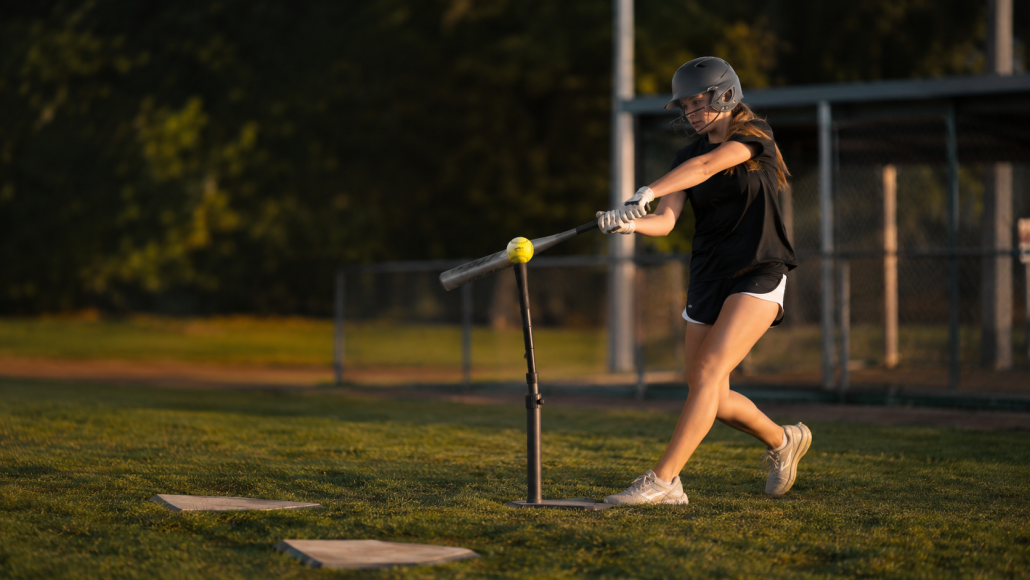
Five softball hitting drills. That’s all this post covers. But these aren’t generic tee work protocols or the same drills that have been recycled in hitting instruction for 30 years. Each one targets a specific mechanical problem — the kind that survives hundreds of reps of normal batting practice because batting practice doesn’t give hitters the right feedback to fix it.
Three of the five come from the Catapult Loading System and the Swing Smarter book. One addresses the unique physical reality of fastpitch — the rise ball — that baseball-derived swing instruction completely ignores. And the fifth is arguably the most underused diagnostic tool in all of hitting: using ball flight as real-time swing feedback.
Free Download
5 Softball Hitting Drills to Fix Your Swing — PDF
By Joey Myers — Creator of the Catapult Loading System · 100,000+ players trained
All 5 drills, setup diagrams, cue notes, and a 3-day practice schedule. Works off a single tee — no machine or partner required. Print it and bring it to the field.
Drill 1: What is the top hand three-finger pressure drill and why does it matter?
The top hand three-finger pressure drill establishes the connection between the spinal engine — the rotational core — and the hands and bat, so the swing is driven by the body instead of the arms. Most hitters grip the bat with the top part of the top hand: palm, index finger, and thumb. That grip pattern disconnects the swing from the body’s rotational source. The bottom three fingers — pinky, ring finger, and middle finger — connect directly to the forearm flexors, which run up the kinetic chain to the rotational engine of the swing.
When a hitter grips with the top of the hand, the swing is essentially an arm swing with the body along for the ride. When the pressure shifts to the bottom three fingers, the hands and bat are linked to how the body rotates. The barrel stays connected through contact instead of releasing early.
How to practice the drill
How to do it: Before any tee work, hold the bat in the top hand only. Consciously apply grip pressure with only the bottom three fingers — pinky, ring, middle. Feel how the grip connects into the forearm. Then take your normal grip with both hands, maintaining that bottom-three-finger pressure focus in the top hand. Take 10 tee swings with that cue as the single point of focus. The reference is simple: if you can feel the knob through the bottom of your top hand throughout the swing, the connection is there.
This drill is covered in depth in the Catapult Loading System. It’s also the recommended warm-up before any of the other softball hitting drills in this program — do it before picking up the overload bat or setting up the two-plate sequence. For more on how softball batting grip affects connection and power, that page breaks down the full grip framework.
Common mistake: Squeezing hard with the entire hand instead of emphasizing the bottom three fingers. Whole-hand death grip creates arm tension that works against the rotational chain. Light pressure in the right fingers beats heavy pressure in the wrong ones.
Drill 2: Why do fastpitch hitters need to practice swinging down through the zone?
Fastpitch hitters need a slightly downward barrel path through the zone because the rise ball — the defining pitch in fastpitch softball — moves upward as it approaches the plate, and a barrel that is rising or level cannot make square contact on a pitch that is also rising. The high tee drill trains this barrel path directly.
As a result, most baseball-derived swing instruction teaches hitters to match the plane of the pitch — which in baseball means swinging slightly upward because fastballs have mild downward movement. That instruction is transferred wholesale into softball coaching, where it actively hurts hitters facing rise balls. A hitter who swings upward at a rising pitch either pops it up (barrel gets under the ball) or misses entirely. A barrel moving slightly downward through the zone gives the hitter a chance to catch the ball at any point in the strike zone.
How to do it: Set the tee at shoulder height — letters or above. Use an overload bat (heavier than game bat) for this drill. The goal is to make clean contact on the high ball without the barrel rising to it — instead, feel the knob lead slightly, with the barrel working downward into the high contact point. Ten reps per session. The overload bat makes it harder to cheat the path and reinforces the proper barrel movement pattern.
For a complete breakdown of barrel path in fastpitch, see the fastpitch softball hitting mechanics page.
Pop-up diagnostic: If the high tee drill produces consistent pop-ups, the barrel is getting under the ball — which means it’s rising toward the contact point instead of working down into it. The fix is exaggerating the downward feel, not reducing it.
Drill 3: How does the overload/underload bat drill build real swing speed?
The overload/underload bat drill builds swing speed by using contrast between a heavier bat and a lighter bat to amplify the neuromuscular system’s speed output — a mechanism called post-activation potentiation. Five swings with a heavier bat prime the motor units involved in the swing to recruit more muscle fiber. Five swings with a lighter bat allow the nervous system to express force at a higher speed than it could before the overload set. Five swings with the regular bat follow, carrying the combined neural effect of both.
This is not a new concept in athletic training — sprinters have used contrast loading (resisted sprints followed by unresisted sprints) for decades, and the NSCA has documented contrast training effects across multiple sports. Applied to the swing, the mechanism is well-established. The bat weight difference matters: the overload bat should be no more than 20% heavier than the game bat, and the underload bat no more than 20% lighter. Outside that range, mechanics change to compensate and the drill loses its effectiveness.
How to do it: One round = 15 swings. Take 5 swings with the heavy bat (overload). Without resting, take 5 swings with the light bat (underload). Without resting, take 5 swings with your regular game bat. The no-rest protocol is intentional — the contrast effect depends on the nervous system being active from the overload set when the underload set begins. Two to three rounds per session is sufficient. More volume dilutes the neural effect.
For more on the research behind weighted bat training, see safe youth weighted bat training and overload/underload progressions.
Equipment note: A cut-down youth bat or a fungo bat works well as the underload option. For the overload, a donut weight on the game bat or a dedicated overload training bat both work. Avoid batting gloves on the underload bat — a lighter grip feel increases the swing speed effect.
All 5 drills are in the PDF — download it free and bring it to your next tee session.
Drill 4: How does the two-plate timing drill train you to hit different pitch speeds?
The two-plate timing drill trains pitch-speed adaptability by forcing the hitter to shift their contact point and commitment window within a single round of swings — mimicking what a varied pitching staff does across a full game at bat. Two home plates are set 3–5 feet apart. The hitter takes 2 swings at one plate, switches to the other and takes 2 swings, then returns to the first for a final 2 swings — 6 swings total per round.
The near plate requires an earlier contact point and a quicker decision. The far plate requires more patience — the hitter must wait longer before initiating the swing. Alternating between them over the course of a round trains the brain’s pitch-recognition and contact-point calculation systems to adjust automatically rather than rely on a fixed timing pattern built around one pitch speed.
In practice, most hitting practice is done at a fixed distance from the tee, which trains a fixed timing pattern. That fixed pattern works great until a pitcher changes speeds or a changeup is thrown — and then it falls apart completely. The two-plate drill is the fix for that.
How to do it: Set up two home plates, one at your normal tee position and one 3–5 feet in front of it (closer to the pitcher). Set a tee over each plate at your normal contact height. Take 2 swings at the back plate (normal timing), shift the tee to the front plate and take 2 swings (earlier contact, quicker reaction), shift back for 2 swings. Three rounds of 6 swings is a full session. The drill can also be done with a soft toss partner aiming at different distances.
Related: see the timing drills for hitting a softball breakdown for more plate-discipline and pitch-recognition work.
Drill 5: What is the ball-flight adjustment drill and why is straight flight the goal?
The ball-flight adjustment drill uses the ball’s trajectory off the bat as real-time swing feedback, with straight ball flight — the ball leaving the bat at the same angle and height it arrived — as the target. The objective of every swing in this drill is to eliminate all four bad-contact outcomes: groundballs, fly balls, hook spin, and slice spin. Making adjustments toward the middle is always the goal, every rep.
The diagnostic map: what each ball-flight outcome means
Here is the diagnostic map. Each bad-flight outcome tells you exactly what the barrel did:
- Groundball — the barrel dropped below the center of the ball. On the next swing, contact the top half of the ball (swing slightly higher through the zone).
- Fly ball / pop-up — the barrel rose above the center of the ball. On the next swing, contact the bottom half of the ball (drive through lower).
- Hook spin (pull-side curve) — the barrel contacted too far to the inside of the ball, imparting left-to-right spin (for right-handed hitters). On the next swing, contact the outside half of the ball.
- Slice spin (push-side curve) — the barrel contacted too far to the outside of the ball. On the next swing, contact the inside half of the ball.
Straight ball flight with slight backspin = the barrel hit the center of the ball = perfect contact. This is what the adjustment is always moving toward.
How to run the ball-flight adjustment drill
How to do it: Tee work, 10–15 swings per round. After each swing, evaluate the ball flight before it lands. Make one adjustment if needed — top half, bottom half, inside half, or outside half — and apply it on the very next rep. Do not make multiple adjustments at once. The drill trains the feedback loop: see the flight, identify the miss, adjust the barrel position, repeat. Over time, this self-correction becomes automatic. It’s more useful than any coach watching and calling corrections from outside the batter’s box, because the feedback is instant and direct.
Of all the softball hitting drills in this program, this one is the most self-sufficient — it requires no partner, no special equipment, and no video analysis. The ball tells you everything. It also pairs well with softball batting drills for power once contact quality is dialed in — because power without consistent center contact doesn’t show up in exit velocity the way it should.
Coaching note: This drill is extremely effective with players who hit a lot in BP but don’t make adjustments during games. The reason is usually that they’ve trained a fixed swing pattern without a feedback loop. Ball flight forces the loop open.
How often should you use these softball hitting drills?
Two to three drills per practice session is the ceiling. Each drill requires focused attention on a specific mechanical cue, and deliberate swing quality degrades after roughly 20–25 minutes of concentrated tee work. A better structure: treat Drill 1 (top hand pressure) as a daily pre-practice warm-up before any tee work. Then rotate through Drills 2–5 across different sessions.
The overload/underload drill (Drill 3) and the two-plate timing drill (Drill 4) pair well together in the same session — one trains swing speed, the other trains pitch-speed adaptability, and neither requires feedback-intensive concentration between reps. The ball-flight adjustment drill (Drill 5) and the high tee drill (Drill 2) are better done alone or as the primary focus of the session because both demand rep-by-rep evaluation.
For players 13 and older, three structured tee sessions per week using these softball hitting drills — each with 2–3 drills, 10–15 reps per drill — is a solid baseline. For younger players, two sessions per week with higher rest between rounds is better. The goal is quality of movement, not volume of swings. See the softball hitting tips for beginners page for a complete practice structure framework for newer players.
More Free Programs from HPL
Free Download
Get the PDF — All 5 Drills on One Sheet
One page per drill. Setup instructions, coaching cues, and a 3-day practice schedule. Print it, bring it to the field.
Frequently asked questions about softball hitting drills
What are the best softball hitting drills for beginners?
The best softball hitting drills for beginners focus on connection and contact quality before adding speed or power. The top hand three-finger pressure drill establishes how the bat connects to the body’s rotational engine — without that connection, other drills don’t transfer well. The ball-flight adjustment drill is also excellent for beginners because it uses the ball’s flight path as instant feedback rather than requiring a coach to identify what went wrong.
How does the overload/underload bat drill improve bat speed?
The overload/underload bat drill improves bat speed through contrast training. Five swings with a heavier bat prime the neuromuscular system to recruit more muscle fiber. Five swings with a lighter bat then allow the nervous system to express force at higher speed than it could before the overload set. Five swings with the regular bat follow — carrying the combined neural effect of both. Done consistently, this produces measurable swing speed gains that transfer into competition.
Why do fastpitch softball hitters need to swing differently than baseball hitters?
Fastpitch softball hitters face the rise ball — a pitch with upward movement through the hitting zone. To make square contact on a rising pitch, the barrel must work slightly downward through the zone rather than level or upward. Baseball hitters facing predominantly downward-breaking pitches can swing more upward through the zone, but fastpitch hitters who do this will consistently pop up or miss rise balls entirely.
What is the two-plate timing drill in softball?
The two-plate timing drill uses two home plates spaced 3–5 feet apart to train reaction time for different pitch speeds. A hitter takes two swings at one plate, then switches to the second plate and takes two more swings, for a total of 6 swings per round. The near plate requires an earlier commitment and contact point; the far plate requires more patience. Alternating between them trains the brain to adjust contact point without conscious thought — which is exactly what happens against varied pitching in a game.
What does straight ball flight mean in softball hitting?
Straight ball flight means the ball leaves the bat at the same angle and height it arrived, with minimal side spin and slight backspin — a true, flat trajectory. It indicates perfect contact: the barrel found the center of the ball. Groundballs signal the barrel dropped below center. Fly balls signal the barrel rose above center. Hook spin means the bat contacted too far inside the ball. Slice spin means too far outside. Straight flight is the target every adjustment is made toward.
How many softball hitting drills should you do in one practice?
Two to three softball hitting drills per practice session is the right range for most players. Doing all five in one session creates cognitive overload — each drill requires focused attention on a specific mechanical cue, and quality degrades after about 20–25 minutes of deliberate swing work. Use Drill 1 as a daily warm-up, then rotate through Drills 2–5 across different practice days. The overload/underload drill and two-plate timing drill pair well in the same session.
Can softball hitting drills be done without a pitching machine or partner?
Yes — all five drills in this program can be done with just a batting tee, two home plates, and a bucket of balls. The top hand pressure drill and ball-flight adjustment drill work best off the tee. The high tee drill requires only a tee set at shoulder height. The overload/underload drill requires a heavier and lighter bat — no partner needed. The two-plate timing drill can also be done off the tee by setting it over each plate position alternately.

With 28,000+ online bat speed program sales, my methods have transformed coaches, instructors, and parents just like you. I'm affiliated with esteemed organizations like ABCA, IYCA, and SABR, advocating for positive coaching. With 15+ years in corrective fitness and a Division One baseball background, my knowledge is unmatched.
Join our blog and unlock the secrets to successful hitting, elevate your performance, and ignite your passion. Welcome to the world of limitless possibilities at HittingPerformanceLab.com.
- The Season Started. Here’s The Program That Keeps Your Daughter Athletic Through All Of It - September 27, 2026
- The Season Started. Here’s The Program That Keeps Your Kid Athletic Through All Of It - September 27, 2026
- Baseball Pitcher Workout Program PDF: Free 12-Week Off-Season Strength Plan for HS and Youth Pitchers - September 26, 2026