Posts

Learn how to fix the lower half stride load swing technique including drills for baseball and softball players.

Alex Gordon Swing Analysis Experiment: Top Out Bat Speed By Striding Closed?


Question: Does Striding Front Leg Closed Increase OR Decrease Bat Speed?

I was taught my whole playing career to stride front foot closed.  Using the Zepp (Labs) Baseball app, I wanted to use the Scientific Method to analyze whether striding with the front leg closed will have a positive or negative effect on bat speed.

Background Research

Here are a couple posts to further your understanding of spinal engine mechanics, as we move to discover what effect striding with a closed front leg will ultimately have on bat speed…

Also, CLICK HERE to watch this video from ZenoLink’s Chris Welch on stride principles.

Hypothesis

Based primarily on my research and study of Dr. Serge Gracovetsky’s book The Spinal Engine, I believe landing with an open front leg – like Alex Gordon – will result in increased bat speed and farther batted ball distance.  Landing closed with the front leg – like Kansas City Royals catcher Salvador Perez (who popped out to end the 2014 World Series) – will result in an inefficiency to hitting inside and high pitches.  And will allow other compensations to occur such as rolling over, pulling the head, and the front shoulder flying open.

Alex Gordon: Striding Open/Closed Experiment

Equipment Used:

  • Zepp Baseball app,
  • ATEC Tuffy Batting Tee,
  • Bownet,
  • Rawlings Official NCAA Baseballs,
  • Two yellow dimple baseballs (feedback markers),
  • Flip Video Camera and Tripod, and
  • 33 inch, 30 ounce Pinnacle Bamboo bat.

Setup:

  • Yellow dimple ball feedback markers = my bat length, plus two baseballs
  • Distance from plate = end of the bat touching inside corner of plate, and knob of bat touching my mid-thigh
  • Tee was set one baseball’s length behind the front feedback marker, and tee height was about mid-thigh
  • Forward momentum was eliminated in this experiment, and I hit from a 1-2 second pause at landing
  • First 100 baseballs hit I was striding with a CLOSED front leg
  • Last 100 baseballs hit I was striding with an OPEN front leg
  • There was about 15-30 minute break between both Alex Gordon & Salvador Perez Experiments

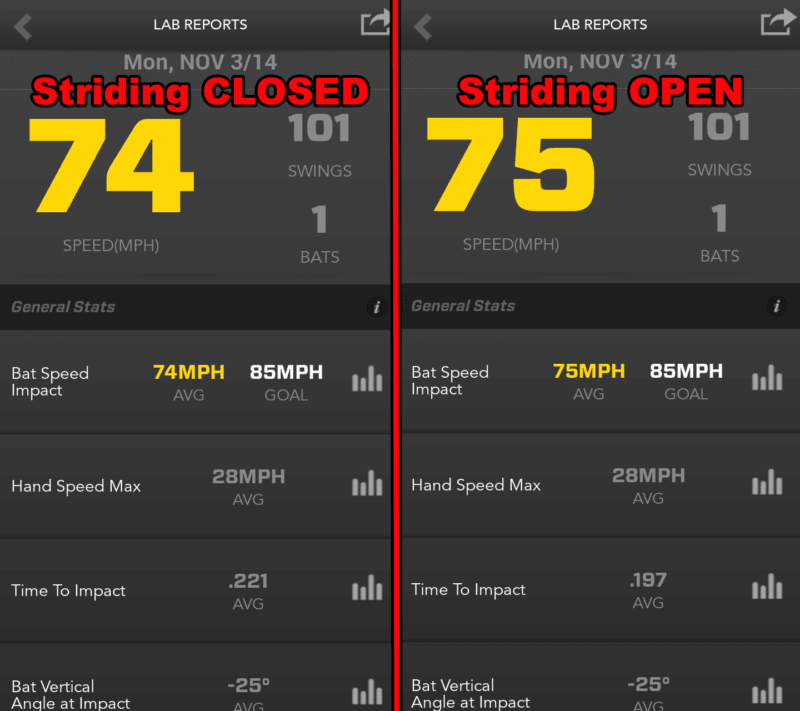
Data Collected (Zepp Baseball App):

Alex Gordon: Top Out Bat Speed By Striding Open?

First 100 balls (striding CLOSED), last 100 balls (striding OPEN)

Data Analysis & Conclusion

Observations from the Zepp Baseball app screen capture above:

  • Striding OPEN added 1-mph of bat speed on average
  • Interestingly, striding CLOSED added 0.024 “Time To Impact” on average

Not much change there…but the devil’s in the details…

Alex Gordon Closed/Open Stride Experiment

Breakdown of Alex Gordon Striding Closed Experiment (swings & bat speed)

  • Striding CLOSED shifted bat speed downstream into the [< 69] to [70-74-mph] ranges
  • Striding OPEN shifted bat speed upstream into the [75-79] to [80+ mph] ranges
  • Striding CLOSED top out bat speed was 81-mph…80-mph (once) and 81-mph (twice)
  • Striding OPEN top out bat speed was 83-mph…80-mph (6-times), 81-mph (3-times), 82-mph (3-times), & 83-mph (once)


Notes

Alex Gordon: Top Out Bat Speed By Striding Closed?

Salvador Perez never had a chance striding closed against Madison Bumgarner photo courtesy: MLB.com

  • Striding open with the front leg definitely increased top out bat speed (83-mph v. 81-mph).
  • There was a better chance to maintain higher bat speeds with striding open.
  • During the Alex Gordon Experiment, when striding front leg open, my front foot was at a 45-70 degree angle.
  • I also felt that I had an easier time accelerating the barrel down (towards catcher’s glove) when my stride leg was open, which helped keep my bat speed more consistent.  I felt like I had to pull across my body (or chop down) striding with a closed front leg, which made my bat speed more erratic during the first part of the Experiment.
  • I purposely eliminated forward momentum from the Experiment because I wanted to isolate how much striding closed took away from bat speed.  In addition, I wanted to preserve accuracy in execution with the two different mechanical scenarios.


The Bottom Line?

Spinal engine mechanics drive all human movement, according to Dr. Serge Gracovetsky.  When we do things to hinder efficient spinal engine mechanics, reciprocal inhibition takes over depressing a hitter’s ability to maintain higher bat speeds over longer periods.  In addition, striding with a closed front leg will cause a hitter to be inefficient getting to inside and higher pitches.  A great number of coaches teach hitters to stride with the “front foot closed”.  This is the very reason the following compensations occur that these coaches waste their time trying to correct!!

  • Front shoulder flying open,
  • Head pulling out, and
  • A shorter hand and barrel path to the ball, resulting in the
  • Barrel having limited time on the plane of the pitch, which increases mis-hits and strikeouts.

This is why I think Salvador Perez had a hard time handling Madison Bumgarner.  MadBum kept busting him up and in.  Because Salvador Perez strides closed I believe this stunted his chances of knocking in Alex Gordon from third at the end of the game.

Find out if a NO stride versus leg kick makes for a better MLB player swing – does it REALLY matter?  In this video, discover whether you should STOP hip coil and hip slide hitting drills for lower body baseball and softball stride mechanics.  And lastly, learn how to hit line drives and square the ball up more often.

Anthony Rendon Swing Analysis: “Getting Shorter & Staying Shorter”


Hey, what’s going on, it’s  Joey Myers from the Hitting Performance Lab.  In this Anthony Rendon swing analysis, we’re going to go over a couple of things…

  • Inward turn of the pelvis pre-stride touchdown?
  • “Hip slide” as a stride technique,
  • Shifting foot pressure, and
  • Get short, stay short…

Transcription of above Anthony Rendon swing analysis is what follows…


Inward Turn of the Pelvis Pre-Stride Touchdown?

First off, I wanted to show a pitcher’s view and talk about how really insignificant the turning in of the pelvis is. I have Javier Baez over here on the right, and I’ve done a swing analysis on him where we talked about this.  Anthony Rendon is over here on the left.

You can see the difference in how much that they turn their pelvis in or don’t turn their pelvis in. And my argument is that we really don’t need to do that. We talk about putting the hips on a skewer … where the skewer goes through the hips towards the pitcher and that the hips slide on that skewer.

The only time they can come off the skewer is during the actual turn itself as the pelvis starts to open. But we don’t want to see it come off the skewer, by turning into the skewer before that, which we see Baez doing over here. You can see both butt cheeks pretty much from there, which you really only see one butt cheek over here with Anthony Rendon.

I wanted to start this off and show you this view and just take my word for it … there are many swings here of Anthony Rendon, who’s doing the same thing in all of them. It’s not just because this pitch is inside.

Anthony Rendon Swing Analysis: “Hip Slide” as a Stride Technique

Now, one thing I wanted to highlight, in this Anthony Rendon swing analysis video is the hip slide as a stride technique. And what you’ll see here is Anthony Rendon really doesn’t have much of a stride. You can argue here that maybe he’s got a little bit of a toe tap where he kind of sets the foot out there. He’s got his weight at about a 60/40 type of position. And then what you’re going to see is his hips slide forward on that skewer. And then he’s going to start his turn.

I have some hitters that do this, and that choose to do this especially with two strikes or when they’re facing somebody, a pitcher that’s got above average velocity, and that is OK. The stride in our system is not meant for power. In the stride, I argue for any hitting system doesn’t really contribute much power to the swing. You might get a half a mile per hour ball exit speed with a longer stride versus no stride. But a stride’s main purpose is timing.

If my hitters are getting on time more often or they’re comfortable with their timing and their stride, then we don’t touch anything. However, if they’re having a hard time with their timing and they have a high leg kick, then we may experiment with the toe tap or we may experiment with this hip slide style.


Shifting Foot Pressure

One thing I want you to check out in this hip slide is the shifting foot pressure, no matter what the hitter is using as a stride type, whether it’s a leg kick, medium or high, a toe tap, a hip slide, or a slide step.

Does it really matter?

You’re going to see them using shifting foot pressure. We should see in the beginning before the turn happens, before the hitter starts turning, and we should see foot pressure on the outside part of the back foot and the inside part of the front foot up until the start of the turn.

As you can see here, this is the start of the turn here. He’s starting to load and take slack out of his system. And then you’re going to see that shifting foot pressure go to the opposite side of what he started with. You’re seeing on the outside here is going to shift to the inside of the back foot and it’s going to shift from the inside of the front foot to the outside of the front foot.

Oftentimes you see hitters, some hitters more than others, where you can see the bottom of their front foot because they’re on the outside or on the fifth metatarsal of the foot – the pinky bone in the foot. You see the bottom of their foot as they do it. Now, this isn’t a teach. I don’t talk about doing more or less than that. Typically, when the ball is closer to the hitter, you’ll see more of the bottom of the foot. They’ll be more on the outside part of the front foot.

And if the ball is more away, you’ll see the foot a little bit flatter. Now, in this Anthony Rendon swing analysis, you can see that he stays pretty stable, pretty grounded with it, the sole of his foot, although it can be argued that he is definitely on the outside part of his foot, but more of the bottom than other players.

So this is the idea of a hip slide. It’s OK for hitters to use, especially facing high velocity pitching, or maybe a two strike approach. But the objective of this is, if you’re going to use a hip slide, minimal stride, minimal feet off the ground. The objective is to get on time more often. It isn’t about gaining power, or taking away power. It’s a timing mechanism.


Get Short, Stay Short

In this Anthony Rendon swing analysis, I’m going to show you a couple of swings exemplifying him getting shorter and staying shorter or getting low and staying low.

The benefits to this are when the hitter gets taller, as some coaches teach, getting their hitters to get tall or stand tall or stay tall or whatever. What tends to happen is, it pulls the hitter up on the plane and the pitch. They tend to hit the ball on the ground more, and if they are a little bit more mindful about their batted ball outcomes, and they are hitting more ground balls as they’re swinging, getting taller…

What they’ll end up doing is they’ll compensate by using their hands more to get under the ball. We don’t want to do that. We want to let the hands just swing. We want the body to get the barrel on the plane of the pitch.

What you’re going to see at the start of the swing, even with a hip slide, you’re going to see him drop below that bottom line. At the start of his turn, this is a typical at stride landing position, so if a hitter wasn’t using this hip slide … they were using a slide step or leg kick or whatever, you would see the best hitters drop below the starting line.

Or maybe if they’re more crouched like a Victor Martinez was, he’ll start at this bottom line and stay under. This line down here. So, you’re going to see he doesn’t really pick this back foot off the ground. He just kind of goes to the toe, shifts his weight against a braced front side, which is “a” OK.

As long as there is a shift going on there, of the center mass, we’re not squishing the bug or putting out a cigarette butt.

But you’re going to see him stay below this line. So, he’s going to get short. He’s going to stay short. And he’s using his knee action. He’s using the distance between his feet to do this. Players that tend to skip too much, they skip their back foot six inches will end up taller above this line. And as they’re swinging, they’re getting taller.

This messes with vision and tracking. It messes with them getting on the plane, Anthony Rendon even actually gets lower during his turn. You see him getting lower and staying lower.

Here’s another at-bat you can actually see from the beginning. You can see this hip slide toe tap, staying shorter principle where he’s starting at his head setting the top line. Then you’re going to see him set that foot out there. And he is going to, what we’re going to talk about it in a minute, he’s going to sit into this back hip, or his back-hip pocket.

Then you’re going to see him as his hip slides before his turn happens. You see him sink below the bottom line and he’s going to stay short or stay under that bottom line. Now, we talked about the neutral position that his pelvis, or hips, start in versus Javier Baez earlier in this video. You can see that here. And then what he’s going to do as he gets that front foot out there is, he’s going to sit and sink.

A couple of things we work on with hitters…

Sometimes our hitters will, as they stride, will straighten this back leg and will make them taller, obviously. Wherever they start, they’ll end up above the line. Well, what we do is there is something in there that that hitter is trying to take slack out of this system, trying to create and hunt and seek out stability to be able to move from as they move into their turn. And they will straighten this leg out, which there is stability in straightening the knee out. And also, possibly going into kind of a hip extension where you come out of a hip hinge, or an athletic position.

We want to promote or encourage our hitters to be in more of an athletic position, which you see in this Anthony Rendon swing analysis. You can see that’s what he’s doing. One thing we do is take this back toe … instead of it pointing straight at the plate or perpendicular to the plate. We turn the back toe in slightly, which now gives the hitter a little bit of hip torque in the back hip.

The second thing that we do is, as you’re seeing Anthony Rendon do here, is you’re seeing him sit or sink into this back hip or back hip pocket. He’s just kind of like there’s a harness going over the back butt cheek. So, for a righty, the right butt cheek, and for lefty the left butt cheek.

Maybe they might feel that they’re pinching their back groin a little bit, but they should feel like they’re bone in their butt is peeking out of that back-butt cheek, they’re sitting into that harness back there and it’s not a rotating inward of the hip. We saw that at the beginning of this video comparing it to Javier Baez.

We saw Anthony Rendon not inward turn his hips. He sat into his back-hip pocket. That’s more like what we’re trying to do. We’re trying to keep the hips on the skewer.

You see him sit. He goes from this kind of neutral position and then you see him take that stride and you see him sit into this back hip, which creates an environment of taking slack out of the system.

You turn that back toe in, creates back hip torque. And now we sit into that back-hip pocket and now we’re all ready to go with the pelvis.  Again, not an inward turn. He’s just sitting into it. It’s more linear, but in a diagonal fashion, it’s not back towards a catcher, but it’s kind of more behind, in line with the hitters back butt cheek.

Here it is again. Anthony Rendon swing analysis. You can see the getting shorter, staying shorter.  He starts at the top. He gets out to that stride, that 60/40 weight distribution, you can see this back toe turn slightly in. You can see him sit or sink into that back-hip pocket. It’s like he’s sitting down on one side of his butt cheek.

You’re going to see him move as he’s getting close to the turn. You’re going to see him move under the bottom line and he’s going to stay shorter and stay under the bottom line.

What’s also interesting to note here is this pitch is in and up, in or up, in and or up, and you’re going to see the barrel path… He’s not snapping it backwards like you see a lot of coaches doing. And teaching. It’s okay to snap it backwards… when we’re talking pitches middle away or middle down.

What he’s doing is he’s imagining that there’s a catcher’s gloves set up at his belly button and he is knocking that catcher’s glove off.  In order to get to this pitch, which is middle in and/or middle up. At a higher speed, this is how we catch up or how the best hitters catch up to pitches depth wise that are closer to their eyes and faster.

All right, last swing in this Anthony Rendon swing analysis, you can see, again, all the principles. In conclusion of this video, you’re going to see him maintain his distance between his feet. He’s going to start at the top before his swing starts, he starts to turn. He’s going to drop below the bottom one by maintaining the distance between his feet is going to help him to get shorter and staying shorter.

You can take a PVC pipe with your hitters. You can set it at about their nose level and have them practice getting shorter, staying shorter by using their knees. We also don’t want them to skip too far. We tend to like the one to three-inch skip and it all depends on how tall the hitter is and how young the hitter is. We maintain the distance between the feet. We use the knees.

You can see Anthony Rendon using his back knee. Even though the front knee gets straight, which some hitters like Anthony Rizzo, Cody Bellinger, Adrian Beltre … they tend to on pitches down in the zone, will keep this front knee bent and won’t actually get it to straight. But they’re also using their knee action to stay shorter, to stay below the bottom line.


How To Train Hitters with this…

And how do we do this? How do we train this into our hitters by taking this back foot, turn it slightly and towards the pitcher to create some hip torque back here. We are going to have the hitter sit or sink into that back hip. They’re going to feel like a bone is sticking out of their back-butt cheek.

And they’re going to ride that feeling up until their stride landing position. It also might help by using shifting foot pressure, getting the hitter to understand that they’re going to start on the outside of the back foot, inside of the front foot. And as they approach stride landing and about this point, you’re going to shift it to the opposite side of each foot. Outside becomes the inside of the back foot and inside becomes the outside of the front foot.

And this is an easy way to practice this. They can just do it in the room by just standing sideways like they’re hitting, grabbing their thumb, their top hand thumb and practice, shifting back and forth, back and forth, back and forth.

Again, in this Anthony Rendon swing analysis video, we talked about:

  • The hip slide as a stride technique,
  • Shifting foot pressure,
  • The difference between Javier Baez and Anthony Rendon and how they inwardly turn the hips pre stride landing or they don’t, and
  • The benefits of getting shorter, staying shorter, what to look out for distance between the feet, minimal to zero skip …
  • Using the PVC pipe…

…make sure that you’re swinging smarter by moving better. And before I let you go, please like this video on YouTube, like our YouTube channel, and check this out…

Discover how much the baseball and softball toe tap, long stride length, or no stride contributes to bat speed.  Does stride help to hit the ball better, farther, and with power?  Learn lower half swing experiment and best load mechanics of MLB hitters

Troy Tulowitzki Swing Breakdown: Stride Killing Bat Speed?


Question: Does Stride Length Kill Bat Speed?

Using the Zepp (Labs) Baseball app, I wanted to use the Scientific Method to analyze whether Troy Tulowitzki’s longer stride increases or decreases bat speed.  Not just a longer stride, but I want to see the torso moving forward as well.

Background Research

Troy Tulowitzki had a wider stance in 2013.  In 2014, he’s adopted more of a narrow stance and a longer stride length.

Forward Momentum may be a new concept to hitting, but not to other explosive rotational athletes.  It’s also known as the Conservation of Linear Momentum and the Un-Weighting Principal.  The idea is that the hitter is getting a “head start”.  Other high level athletes using Forward Momentum:

  • Olympic Throwers (Discus, Javelin, and Hammer)
  • Olympic Shot Put
  • 4 X 100 meter relay sprinters
  • Circus Trapeze Artists
  • Lacrosse Players
  • Hockey Players

Hypothesis

I think the addition of forward momentum, or a longer stride length, will contribute to more bat speed because this gives the hitter a “head start”, making the body feel lighter while moving.  This allows the body to turn harder, and ultimately increase bat speed.

Troy Tulowitzki Experiment

Equipment:

  • Zepp Baseball app,
  • ATEC Tuffy Batting Tee,
  • Rawlings Official NCAA Baseballs,
  • Two yellow dimple baseballs,
  • Galaxy S3 phone camera, and
  • 33 inch, 30 ounce Pinnacle Bamboo bat.

Setup:

  • Feedback markers = my bat length, plus two baseballs
  • Distance from plate = end of the bat touching inside corner of plate, and knob of bat touching my mid-thigh
  • NO-stride stance was width of feedback markers
  • Forward movement stance was open, and feet set a little wider than shoulder width
  • Tee was set a baseball or two behind the front feedback marker, and tee height was about mid-thigh
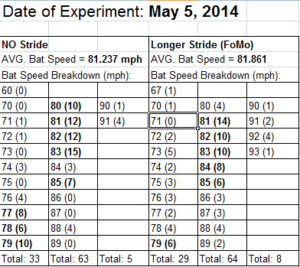
  • 101 baseballs were hit using both the NO-stride and longer stride sessions

Data Collected:

Results of Tulo Stride Length Bat Speed Experiment

Pay particular attention to the bold typeface


Data Analysis & Conclusion

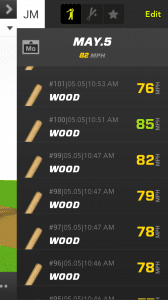
Last 6 Swing Zepp Baseball app

NO-stride: last 6 batted balls (Zepp Baseball app)

  • 0.624 mph average bat speed increase with a longer stride.
  • Apex of bell curve for NO-stride swings ranged from 77 mph to 83 mph*.
  • With a longer stride, you’ll see the bell curve shifted, 81 mph to 85 mph*.
  • Three more 90 mph+ swings using a longer stride, in addition to increasing my Personal Record 2 mph.

*Based on six or more batted balls repeated in specific mph (bold typeface in the chart above)


Notes

Longer Stride: last 6 batted balls (Zepp Baseball app)

Longer Stride: last 6 batted balls (Zepp Baseball app)

  • Before the experiment I did a 7 minute Dynamic Warm-up.
  • I didn’t just increase my stride length, I moved my whole torso forward.
  • I began the experiment with the NO-stride swings.
  • I took a 20-30 minute break between the two sessions.
  • During the last twenty swings of the longer stride session, I hit five-of-eight 90 mph+ balls.

From the Zepp Baseball screenshots to the right, it’s interesting to note, my bat speed kept up, even increased with forward momentum and a longer stride.  In other words, I wasn’t as tired at the end of hitting over 200 baseballs.

Now that Troy Tulowitzki is using a more narrow stance and generating forward momentum with a longer stride, he’s able to increase his bat speed.  This may explain the surge in opposite field home-runs in 2014.

Perfect Swing Hacking With Forward Momentum: Mike Trout

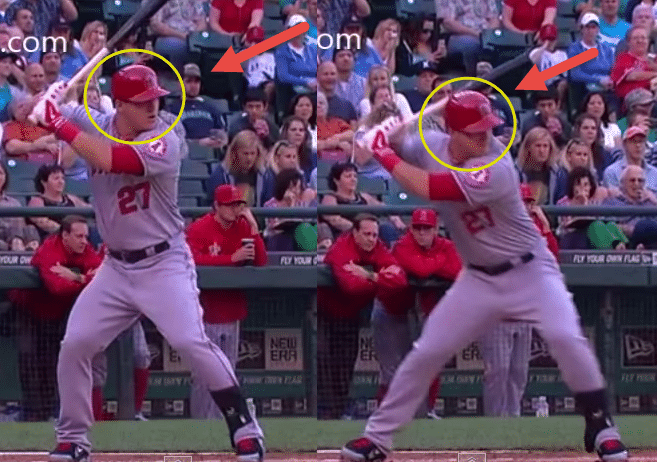
Note the gentleman in the stands with the hat and Mariners shirt on (red arrow) as Mike Trout’s head moves forward to landing. Photo courtesy: YouTube user: PastTimeAthletics.com

Learn how to keep head position and eye on the ball with stride length for baseball and softball swings.  Discover MLB players load stride hitting versus no stride batting drillsPLEASE NOTE: it is our position at HPL that the stride mostly contributes to timing, NOT power.

Perfect Swing Hacking With Forward Momentum

The most common objection I hear from my hitters is their coaches are dumping on them for using forward momentum.  Because – they say – there’s too much head movement!  These coaches keep saying the perfect swing shouldn’t have head movement.

In a way, they’re right!  But there’s a bit of confusion as to when head movement is okay…and not okay.  You see, the perfect swing, has head movement.  ALL dynamic movement does.  Did you know our head bobs up and down when we walk and run?  Try watching television upside down and you’ll see it clear as day.

Click Here for a SABR.org study titled: “Baseball Swing Stride and Head Movement Relationships”, from SAMUEL J. HAAG, an assistant professor of Kinesiology and Health Sciences at Concordia University, St. Paul.  The study concluded:

“The present findings suggest stride height and stride length are not associated with displacement of the head during the baseball swing in experienced collegiate baseball players.”

But it’s the timing of head movement that matters.  In this post, we’re going over:

  • Balance without thinking,
  • Debunking a common objection & a study, AND
  • Perfect swing examples…

Balance Without Thinking

Proprioception.  I know it’s a big ugly word.  But it has A LOT to do with the perfect swing.  At least when we talk about head movement.  Experiencing proprioception is easier than saying the word itself!

Try this…

Stand up, lift one leg, and close your eyes… You feel your standing ankle and foot wobbling to balance your body?  This balance happens without you having to think about it.  It’s an unconscious process, like breathing.  Here’s how balance without thinking breaks down when looking at the perfect swing…

  • Scenario #1 The Sit Back Hitter – during stride, keep 60% of weight on BACK leg, being soft with the landing foot like you’re stepping on unbroken eggshells.
  • Scenario #2 The Forward Momentum Hitter – during stride, commit 60% of body weight to FRONT leg at landing, thereby breaking the “eggshells” in scenario #1.

Let’s apply proprioception to where the two scenarios left off above… In Scenario #1, to bring the body back to balance, the brain shifts the weight forward during the Final Turn.  In other words, the heads moves later.

In scenario #2, to restore balance, the brain shifts the weight back during the Final Turn.  Because of the transfer of linear into angular momentum, the head will become the center axis of rotation along with the spine.

We sacrifice head movement early, for little to no head movement later.

Do an experiment with the two scenarios above.  Record your swing using the Coaches Eye or Ubersense app.  Try and swing as hard as you can under complete control.  And note the change in head position between the two scenarios.  In a perfect swing, you’re going to have head movement.  But the question is, when do you want it?  BEFORE or DURING the Final Turn?


Debunking a Common Objection & a Study

CLICK HERE for a great FanGraphs study that Dan Farnsworth did on June 17, 2013 titled “Breaking Down the Swing: Best Hitters of 2012”.  Scroll down a ways and start reading under the section: “Keep Your Head Still”.

Farnsworth compiled a list of the top 50 hitters from the 2012 season according to Fangraphs’ Batting component of WAR.  He looked at side views of each of these hitters from highlights of the 2012 season in which each player hit a homerun.  You can read the details of how he compiled his measurements in his post.

As Farnsworth says, the main complaint coaches have with Forward Momentum, or early head movement, is that moving the head forward “speeds up the ball”.  This may be true…

But during the stride, the hitter hasn’t made a definitive decision to swing yet.  So again, if you know head movement is inevitable during dynamic movement, then when do you want it to happen?  BEFORE or DURING the Final Turn?

Does a quarterback “rolling out” to throw to a fast moving receiver have head movement?  Yes, until his plant leg hits the ground before throwing.  Does a soccer player have head movement quickly dribbling the ball down the field to get closer to the goal, weaving in and out of defenders?  Yes, until their plant foot hits the ground to kick.  I can go on and one with Olympic Throwers and Shot Putters!

Really think about the answer to that question.


Perfect Swing Examples…

When you watch the following videos, pick out someone or something in the stands behind the hitter to use as a frame of reference in watching for head movement. The following examples were the TOP-5 OPS (On-Base Plus Slugging Percentage) hitters in 2014:


1. Victor Martinez (toe tap)


2. Jose Abreu (toe tap)


3. Andrew McCutchen (slide step)


4. Giancarlo Stanton (toe tap)


5. Mike Trout (medium leg kick)


6. Paul Goldschmidt (little to no stride – technically a toe tap)


7. Albert Pujols (little to no stride)


Fun youth how to teach a no stride, toe tap, and leg kick hitting tips for beginner baseball and softball swing. Hit drills for 6 to 10 years old questions ANSWERED: Where does front foot land, when to stride, and what is the stride length?

Baseball Batting Techniques: Simple Way To Use Forward Momentum That Works For Elite Hitters

Baseball Batting Techniques: Dustin Pedroia and Forward Momentum

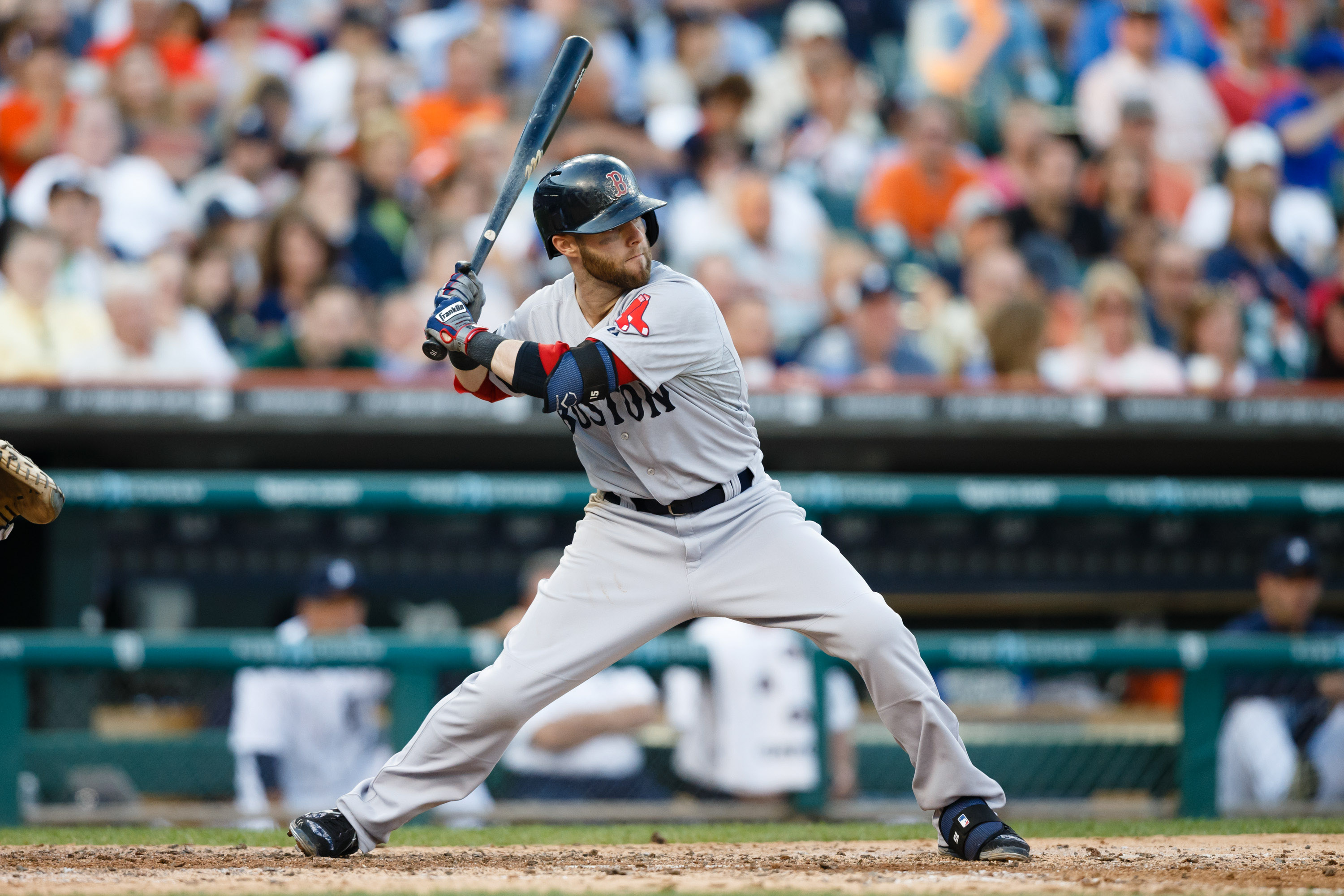
Dustin Pedroia, the King of FoMo. Photo courtesy: Rick Osentoski-USA TODAY Sports

In this baseball batting techniques post, we’ll talk about how elite MLB sluggers employ Forward Momentum (FoMo for short).

I’m going to answer the following questions from my readers:

  1. Does a hitter transfer all their weight to the front leg at some point in the swing?
  2. Does FoMo stride need to be big or small?
  3. Does the back foot “follow” the front with FoMo?
  4. Can a wide no-stride hitter utilize Forward Momentum?
  5. Are FoMo hitters more vulnerable to off speed and breaking stuff?

Keep in mind, forward momentum is the objective, and in this baseball batting techniques post, I’ll show different elite hitter examples of forward momentum.  The important thing isn’t what you use to get Forward Momentum, it’s the Forward Momentum itself.

Let’s get to it…


Does a hitter transfer all their weight to the front leg at some point in the swing?

Yes.  With elite sluggers, it’s rare you don’t find them shifting their weight from back to forward.  We typically see one of a few baseball batting techniques associated with FoMo: 1) a “Float”, or a slight weight shift back, then 2) a “Free Fall” forward.

And FYI during the Float, yes it’s okay for the back knee to drift over the foot, and NOT have to unnaturally be ‘shoved’ inside it.

You’ll see the following hitters, who try and start with the back knee inside the back foot (Jose Bautista), will accidently float the knee back out before falling forward.

The dead give away of elite hitters shifting their weight is to look at the weight distribution at impact.  You’ll see a weight-free back leg at the start of the turning pelvis…

Andrew “Cutch” McCutchen

Troy “Tulo” Tulowitzki

Jose “Joey Bats” Bautista


Does FoMo stride need to be big or small?

Whatever the hitter is comfortable with.  In other words, don’t be so specific in teaching certain Forward Momentum baseball hitting techniques.  Remember, the objective is that they’re employing Forward Momentum.  We don’t really care how they get there.

Feel free to recommend your hitters tinker with and test the following FOUR stride types:

Josh “The Bringer of Rain” Donaldson (BIG Leg Kick)

Dustin “Laser Show” Pedroia (MEDIUM Leg Kick)

Robinson “Mercedes” Cano (SMALL Leg Kick/Slide Step)

Victor Martinez (Toe Tap)

Does the back foot “follow” the front with FoMo?

It doesn’t have to, but I like it too.  If a hitter gets too wide with the stride, and the back foot isn’t allowed to follow, then the hitter will have a challenge getting a tight back knee angle, which is responsible for a better ball launch angle.  CLICK HERE for the back knee angle Zepp experiment.

Roberto “The Great One” Clemente (watch at the 0:33 mark and beyond)

Mike “Millville Meteor” Trout

Bryce “Bam Bam” Harper

CLICK HERE for one of my favorite baseball batting techniques, the Back Foot Variance Drill.

Can a wide no-stride hitter utilize Forward Momentum?

Here are my questions for a coach who would ask this about baseball batting techniques:

  • “Why are you hooked on being so wide with the feet at the start, and/or not allowing a stride?…”
  • “Is it about minimizing head movement?”
  • “Is it cutting down on moving parts?”
  • “Is it a timing thing?”

Coaches on Facebook have told me, the stride is too hard to teach, or for a young hitter to get.  Apparently this poison was shared during a speech at the American Baseball Coaches Association (ABCA) conference.

I’m not convinced, especially when 3-year-old Chinese females are learning some of the most complex human movements in Gymnastics.

Furthermore,

Look to other explosive athletes that almost NEVER start wide with their feet:

  • Pitchers,
  • Olympic Divers,
  • Olympic Throwers,
  • Soccer Players,
  • Quarterbacks, Linebackers, and Deep Backs…

Sometimes, it’s not about choosing particular baseball batting techniques.  It’s a mindset.  I always stress to my hitters, get athletic from the start, and be athletic when you land, so you can transfer the max amount of energy from your body, into the barrel, then to the ball.

About head movement, it’s going to happen. CLICK HERE for a compelling baseball batting techniques analysis by Dan Farnsworth at FanGraphs.com, that demystifies that elite hitters are keeping their head still (Read under “Keep Your Head Still” section).

If it’s about timing, then it’s the timing that must be adjusted.  There are only two timing elements:

  1. When the hitter starts their swing, and
  2. How long they ‘Float’.

A hitter can change one or the other, or both.  It’s up to them.

Those are the adjustments, it’s not a “stride issue”.  CLICK HERE for my favorite baseball batting techniques for timing.

Even big guys use Forward Momentum.  It just looks more subtle…coming in the form of a ‘sliding’ of the pelvis (Cruz and Pujols are great examples of this below)…

Miguel “Miggy” Cabrera

Nelson “Boomstick” Cruz

Albert “The Machine” Pujols


Are FoMo hitters more vulnerable to off speed and breaking stuff?

This is common issue #2 that coaches have with Forward Momentum, a hitter cannot adjust to breaking or off-speed stuff.

I invite you to look at the following sluggers who use FoMo, and their stats don’t reveal they had trouble adjusting to off speed and breaking stuff:

All these hitters had exceptional power, high averages, low strikeouts, and high walks compared to today’s hitters.

Last but certainly not least…

David “Big Papi” Ortiz

And how about Big Papi?  Why wouldn’t we mention him, right?! He just hit his 500th career homer!  He starts and finishes in the same spot, but there’s a whole lot of FoMo going on in-between:


In Conclusion

When it comes to baseball batting techniques, Forward Momentum is the objective.  How we get our hitters there doesn’t really matter.  Just give them examples of how to accomplish more FoMo, and allow them to tinker and test until they find something they’re comfortable with doing.

CLICK HERE to Enter for a chance to Win one free account access to The Truth About Explosive Rotational Power online video course (a $77 value).  You have until 12:00pm PST today to enter.  To better your chances of winning, you can spread the word on social media.  I’ll be picking the winner Monday, September 21st, and reaching out via email.  Good luck! 😀

Contest UPDATE: this contest is now closed, and Jon Ball was our winner!

Answering Baseball Stride Drills Reader Question: “How Important Is Forward Momentum I Know We Must Go Forward But Does It Matter If Stride Is Big Or Small?”


Learn the answers to the following questions: when to use front foot hitting technique, where does the stride foot land, batting step length, and should you use no stride for baseball and softball swing?

“…Once upon a time, there was a little girl named Goldilocks.  She  went for a walk in the forest.  Pretty soon, she came upon a house.  She knocked and, when no one answered, she walked right in.  At the table in the kitchen, there were three bowls of porridge.  Goldilocks was hungry.  She tasted the porridge from the first bowl.

“This porridge is too hot!’ she exclaimed.  So, she tasted the porridge from the second bowl.  ‘This porridge is too cold,’ she said.  So, she tasted the last bowl of porridge.  ‘Ahhh, this porridge is just right,’ she said happily and she ate it all up…”

More in a bit on how Goldilocks and the Three Bears relates to baseball stride drills, but first…

In the following post, we’re addressing the following concerns regarding baseball stride drills (also works for softball):

  • Stride direction and amount,
  • Stride type (experimenting with the ‘Float’),
  • Head movement from stride, and
  • Controlling center mass in stride.

Before getting into the how to baseball stride drills guide, I want to preface that the PURPOSE of a stride shouldn’t be power.  CLICK HERE for a Zepp swing experiment that may confirm this.  If it’s power you seek, then I’d advise looking at the “Build More Power” category.  What purpose does a stride serve?  A stride is for timing and initiating directional force.  CLICK HERE for this post on that.

Let’s get started…

Baseball Stride Drills Direction & Amount

Watch this video from Chris Welch at ZenoLink.  Using data and science, he’s found reasonable markers in guiding baseball stride drills


Here are highlights from baseball stride drills video above:Baseball Stride Drills: Stepping in Bucket Drill Using Bands

  • Stride length should be about 3.75-times hip width (hip-center-to-hip-center)*,
  • At landing, stride direction is to be closed about 10-degrees (straight forward toward pitcher is zero-degrees), and
  • Stride landing foot position to be about 65-degrees open (pointing perpendicular to home plate is zero-degrees, and straight at pitcher is 90-degrees).

(*Denotes 3.75-times hip-center-to-hip-center is length of stride measured from back foot to stride landing.  NOT the measurement of the stride itself.)

Chris says in the video that if a hitter is under or over striding, then they’re hampering body’s ability to create torque.  Stride landing MUST align ball of the foot with ball of the foot.

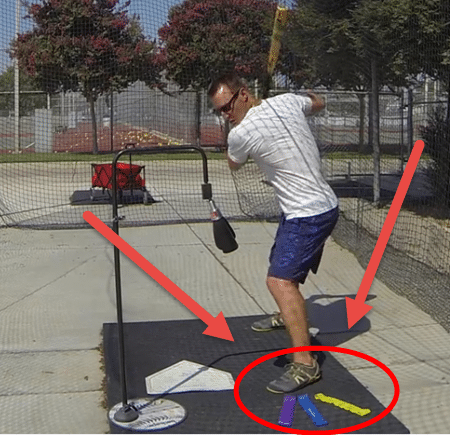
CLICK HERE for a post I did on how to fix “stepping in the bucket” using Reactive Neuromuscular Training (RNT).  With the image to the right, it’s another one of my baseball stride drills using colored bands to fix stepping in bucket or crashing the plate.  If the hitter is crashing too much with their stride, I get them to feel stepping out, and the reverse is true if they’re stepping out.  I use variance to get them in the middle (blue band).

…Goldilocks Golden Rule. 


Stride Type (‘Experimenting with the Float’)

For most intensive purposes, there are 3 stride types:

  • Leg kick – medium (Mike Trout) or large (Josh Donaldson),
  • Slide step – most Big League hitters use this.  Aaron Judge, Robinson Cano, Joey Votto, and Andrew McCutchen just to name a few.
  • Toe-tap – I recommend this for my younger hitters. Troy Tulowitzki, Giancarlo Stanton, and Victor Martinez employ this.

Of course, there are variations to these, but these are the three broad categories of stride types.  I call the stride the ‘float’ and ‘fall’.  The ‘float’ is a momentary shifting of weight back towards the catcher before falling forward.  Matt Nokes calls this the ‘Ride’ and ‘Stride’.  Some hitting coaches don’t like this idea, but the reality is this is human movement.  The Chinese have been practicing exactly this move in Tai Chi for thousands of years…in stepping to my right, I have to make a brief weight shift to the left first.  CLICK HERE for a post analyzing this dynamic move.

I included a lot of video examples (CLICK HERE) of MLB hitters using these different stride types to help guide your baseball stride drills. In that post I concluded with this:

“When it comes to [baseball stride drills], Forward Momentum is the objective.  How we get our hitters there doesn’t really matter.  Just give them examples of how to accomplish more FoMo, and allow them to tinker and test until they find something they’re comfortable with doing.”

…Goldilocks Golden Rule.

Head Movement from Stride

There’s been few online Hitting Guru #57’s saying we want minimal to zero head movement when hitting.  They claim, the more the head moves, the less your eyes see the ball.  And they point to Barry Bonds as their champion.  On paper, this conclusion looks great, and with Bonds as their poster child seems argument seems pretty reasonable.

However, what science says and what the top 50 hitters in the Major Leagues are doing reveals something completely different.  The opposite actually.  Listen, I agree minimal to zero head movement when hitter’s stride foot lands.  And if baseball stride drills are done correctly, this should be a natural result.  But I don’t agree with minimal to zero head movement GETTING TO stride landing – BEFORE the turn starts.

In this post titled, Softball Hitting Tips For Kids: Why Late Head Movement Fails & Early Head Movement Succeeds, we discuss:

  • The Myth of ‘keeping the head still’,
  • Proprioception & dynamic movement,
  • First baseman stretching to receive a throw, and
  • Watching TV upside down.

The biggest bomb NUKING minimal to zero head movement argument, is this 2013 article by Dan Farnsworth at FanGraphs.com titled, Breaking Down the Swing: Best Hitters of 2012.  Farnsworth compiled a list of the top 50 hitters from the 2012 season according to Fangraph’s batting component of WAR (this is a big deal metric).

He looked at side views of each of these hitters from highlights of the 2012 season, in which each player hit a home-run.  Farnsworth says the main complaint coaches have with early head movement, is that moving the head forward “speeds up the ball”.  This may be true, however during the stride the hitter hasn’t made a definitive decision to swing yet.  In the Head Movement piece of the article, Farnsworth concludes:

“Next to no relationship here.  I think this one can be considered dead, simply based on the fact that all of them moved forward to some degree.”

Did you catch that?! Farnsworth revealed in his research of top-50 hitters in 2012, that ALL moved their head forward to some degree.  You see, head movement is inevitable in ALL dynamic movement.  Early is okay, late is not.   Don’t sit there and point to hitting outliers like Barry Bonds, and tell me the top-50 hitters of 2012 all had it wrong.  It was true then as it is now.

Besides, did you know fresh out of the box, humans come with “video stabilizer” eye software?  Ask an ophthalmologist.  In addition, your knees, ankles (Achilles tendon), and hip joints act as shock absorbers too.  If we start our hitters in an athletic position, and most importantly, they land in one, then the hitter will be fully optimized for minimizing the ball “speeding up”.

If you’re still skeptical, then check out this post titled, Perfect Swing Hacking With Forward Momentum.  We discuss:

  • Balance without thinking,
  • Debunking a common objection & a study, AND
  • Perfect swing examples.

Not too much, not too little, just right…Goldilocks Golden Rule.

And last but not least…


Controlling Center of Mass in the Stride

Center of Mass (COM) in the human body is located at the belly button.  This was established in the womb.  The umbilical cord is the center of an unborn child’s universe.  I say this to demonstrate the importance of COM in controlling human movement.

Now, we don’t want baseball stride drills to promote too large or too small of a stride.  Remember? Goldilocks Golden Rule.  Chris Welch from Zenolink said the stride should be about 3.75 times hip-center-to-hip-center, and aligned are back ball of the foot to front ball of the foot at stride landing.  How do we teach this though?  In this post I received the following question from one of my readers…

One specific issue I see in a lot of my players is timing and getting over the front knee too far at contact. What are some good tee drills for staying back and any idea how I can get them to feel it when done correctly.”

In the post titled, Discover Science Of Successful Learning Secret To Fix Lunging (or any swing flaw for that matter!), as it relates to controlling the COM of our hitters, we discuss:

  • Reader question about lunging,
  • “Bean Bag” study from Make It Stick book,
  • WHY we separate PROCESS from PERFORMANCE with hitters learning something new,
  • How it takes time to change ineffective movement momentum into effective, and…
  • Training 4-5 days per week, for AT LEAST 5-mins each day.

And remember the …Goldilocks Golden Rule.