Walk into any MLB stadium and you’ll see a completely different baseball batting stance in every single batter’s box. Ted Williams stood upright and compact. Tony Gwynn narrowed his stance late in his career and simplified everything. Derek Jeter spread wide and open. Josh Donaldson tweaked his setup more times than he can count. Today, Bobby Witt Jr. presets his hip before his stride, Freddie Freeman recently turned his front foot inward to close his hips, and Vlad Guerrero Jr. stands open to buy time on off-speed pitches. All of them are right. None of them look the same. And every one of them passes through the same five checkpoints that determine whether a stance actually works.
↓ Download the free 5-Point Stance Check PDF — or keep reading for the full breakdown.
What did Ted Williams say the proper baseball batting stance actually requires?
Ted Williams was the most analytical hitter who ever played the game, and he addressed the stance directly in The Science of Hitting. His requirements were precise: feet slightly wider than shoulder-width, a slight bend at the knees, a slight bend at the waist, hands near the back shoulder, and eyes level on the pitcher. Williams was specific about hand position in particular — “The further your hands are away from your body, the longer it takes to get into the proper load position.”
Additionally, Williams was dogmatic about one mechanical truth that made his five-point stance framework worth following: hips lead the hands. The purpose of the stance, in Williams’ view, was not to look a certain way — it was to create the conditions for full hip rotation. Weight shift alone, he argued, does not generate power. Hip rotation driven by the stance setup does. Therefore, the stance is not an aesthetic choice. It is the setup for the baseball swing load that generates everything that follows.
For youth hitters, Williams also gave important permission: experiment and find what feels comfortable within those five requirements. He was not advocating for one rigid model. He was identifying the non-negotiables that apply to every hitter regardless of style.
Tony Gwynn said the baseball batting stance doesn’t matter — so what does?
Balance. That was Tony Gwynn’s definitive answer on the batting stance debate, and it cuts through decades of coaching disagreement in one sentence. Gwynn was direct: “Your stance doesn’t matter, but if you’re not balanced by the time you load, you’re out.” He went further: “Balance and adjustability go hand in hand; without balance you really have no chance to adjust.”
This is arguably the most useful framing for youth hitters and coaches because it correctly identifies the stance as a means, not an end. The stance is how a hitter arrives at a balanced, adjustable launch position. Consequently, a wide stance, a narrow stance, an open stance, a closed stance — all of them can work, as long as the hitter achieves balance by the time the stride foot lands. A stance that looks textbook-perfect but doesn’t produce balance at landing is worse than an unconventional one that does. For a full breakdown of Gwynn’s hitting approach, Pro Baseball Insider’s Tony Gwynn hitting series covers his philosophy in depth.
How wide should your feet be in a baseball batting stance?
Shoulder-width to slightly wider is the most reliable answer, and it applies across virtually every elite hitter from Williams through today’s game. The exact width is secondary to what the foot position enables: a hip hinge, a loaded back hip, and a stable base for stride and weight transfer.
Josh Donaldson — who has changed his own setup more than a dozen times over his career — emphasizes what happens at the back hip. Donaldson teaches being engaged into the back hip, not the back knee: “When you are engaged in your back hip you have better balance than when you put all your weight into your back knee. When you are locked into your knee, you will naturally want to jump forward.” His weight setup focuses on the back heel and back hip working together — a subtle distinction that has major implications for load timing and hip rotation efficiency.
Bobby Witt Jr. takes that concept a step further with his hip preset. Before his stride, Witt’s belt buckle tilts slightly toward his back hip. This setup position means his hips are already primed to sequence before the stride foot lands — and when he does land, he arrives centered rather than drifting or rushing forward. That centered landing is what gives him the adjustability to cover all four quadrants of the zone. For more on how the back foot works in this equation, this breakdown of back foot angle and hip loading covers the mechanics in detail.
Where should your hands be in the baseball batting stance?
Near the back shoulder, close to the body. Williams said it plainly, and decades of swing analysis have confirmed it: the further the hands start from the back shoulder, the longer the path to the ball, the harder it is to generate bat speed, and the more likely the swing is to drag through the zone rather than accelerate through it.
Hand position in the stance also determines where the hands travel during the load. When hands start close to the back shoulder at the right height, the load is a compact internal rotation rather than a long reaching motion. That compact load is the difference between a short, direct swing and one that’s susceptible to bat drag — one of the most common swing killers in youth baseball. Furthermore, hands at shoulder height avoid the upward adjustment that occurs when the hands start too low and must travel upward to meet a fastball at the top of the zone.
Cal Ripken Jr., who changed his batting stance many times over his HOF career, consistently returned to one principle: learn yourself as a hitter. That self-knowledge includes understanding where your hands naturally fall at load — and whether that position is helping or hurting your path to the ball.
What are today’s best hitters doing in their stance that youth hitters can learn from?
The most instructive recent example is Freddie Freeman’s front foot adjustment in 2026. Freeman identified a problem — he was pushing balls to left field rather than driving them — and traced it to his hip opening too early in the swing. His solution was to turn his front foot slightly inward (like Corey Seager), which gave his hips a physical reason to stay closed longer before rotating through the ball. His quote on the result was simple: “Obviously that’s helped a lot.”
What makes this instructive for youth hitters is the diagnostic process. Freeman didn’t change his swing. He adjusted one element of his setup — front foot angle — and the downstream result was that his hips rotated more efficiently. That is exactly how stance changes should work: identify a specific problem, trace it to a specific setup element, make one targeted adjustment, and measure the result in ball-in-play data.
Bobby Witt Jr.’s hip preset is similarly instructive. Most youth hitters think of the stance as static — you set up, then you swing when the pitcher delivers. Witt’s approach treats the stance as an active, athletic position where the hips are already loaded before the stride fires. The result is that he gains ground toward the pitcher without losing tension in his rear hip, which gives him both direction and timing. Improving batting timing often starts with this exact principle — the stance isn’t passive, it’s the first movement in a sequence.
Free Download
The 5-Point Stance Check
The printable checklist coaches use to diagnose stance problems in 60 seconds flat — with fixes for each of the 5 most common errors.
No spam. Unsubscribe anytime.
What coaches and players using the HPL system say
“13 year pro ball player here. I just wanted to say how much I enjoy your videos and emails — I couldn’t agree more with the mechanics and techniques you teach. You’re on the right track to unlocking what it takes physically and mechanically to translate what the best in the world are doing every day. Keep up the great work.”
TGARCIA247 ★★★★★ — 13-Year Professional Baseball Player
“Many of my hitters are starting to achieve exit velocities they never thought possible. Averages are up, power is up. I have three girls playing D1, six at D2, two going to JUCOs this fall — and I credit the HPL approach for proving the science and providing convincing evidence.”
Ronny Weber ★★★★★ — Baseball & Softball Coach
“Enthralled with your stuff — can’t even watch football in peace for watching, reading, and thinking hitting. Learning so much from the HPL approach, especially as it relates to what I’ve built my coaching on. Can’t wait to share this in the new year with my team. Now your number-one fan.”
Timothy Merry ★★★★★ — Youth Baseball Coach
The 5-point baseball batting stance check coaches use to diagnose problems fast
Across all the variation in elite batting stances — from Williams to Gwynn to Jeter to Freeman to Witt — five checkpoints remain constant. These are not preferences or style choices. They are the mechanical requirements that every effective stance must meet. Check all five and a hitter’s setup will work. Miss one and the rest of the swing has to compensate.
Checkpoint 1 — Balance
Weight should be roughly centered or slightly back at setup — not forward. Gwynn’s test applies: can the hitter hold the stance for three seconds without swaying? If not, the stance isn’t producing a stable launch position. Weight forward at setup means weight is already forward before the pitch, which eliminates any load and transfer.
Checkpoint 2 — Foot Width
Shoulder-width to slightly wider. Feet too narrow = limited hip rotation room. Feet too wide = restricted stride and hip mobility. The width should allow a full hip turn without the back foot flying out or the front knee collapsing inward. For stride mechanics tied to foot width, the setup and the stride length are directly related.
Checkpoint 3 — Hip Hinge
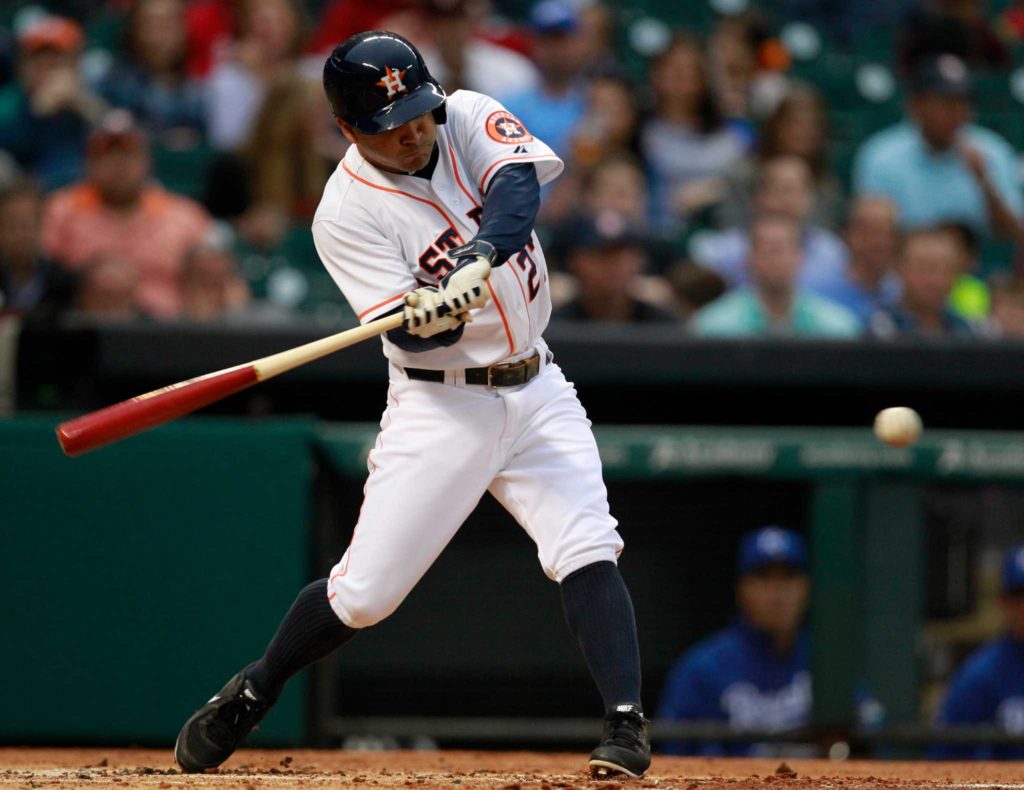
Soft knees with a slight bend at the waist. Standing too upright is the single most common youth batting stance error. An upright stance eliminates the athletic ready position — the same posture a shortstop uses when fielding, a basketball defender uses to stay in front of a ball handler. Without the hip hinge, there is nothing to rotate from.
Checkpoint 4 — Hand Position
Hands near the back shoulder, close to the body, at or slightly above shoulder height. This is the position Ted Williams prescribed. Hands too low create an upward path adjustment. Hands too far from the body create a longer, weaker swing. Check the baseball batting drills that reinforce this hand position through repetition.
Checkpoint 5 — Head and Eye Level
Both eyes on the pitcher, head still and level. This sounds obvious but is violated constantly when a hitter stands with their head tilted, chin buried in their shoulder, or eyes angled rather than level. A level head is a pre-condition for pitch tracking — the eye needs a stable platform to do its job. If the head is tilted in the stance, the visual field is already compromised before the pitch is thrown. For a full list of baseball hitting tips tied to each of these checkpoints, the library covers every piece in depth.
Go Deeper on the Load
Power Hitter 2.0: Engineering The Alpha — The Online Course That Fixes What the Stance Sets Up
Your stance is the setup. Power Hitter 2.0 covers the exact loading mechanism every elite hitter uses — regardless of how different their stances look. Inside: the science behind consistent rotational power, why “load and explode the hips” is the #1 coaching lie, how to stop the front shoulder from flying open, and the load timing system that works across all pitch speeds. One-time payment, $19.99, instant access.
Get Power Hitter 2.0 — $19.99 →
What is the most common baseball batting stance mistake youth hitters make?
Standing too upright is the most common and most damaging stance mistake in youth baseball. A hitter with no hip hinge and no knee bend has eliminated the athletic position that makes rotation possible. The stance looks casual — like someone waiting for a bus rather than preparing to swing at 85 mph. As a result, the only power source available is the arms and wrists, which is not enough against any pitcher with velocity or movement.
The second most common mistake is hands too far from the body. When the hands start extended — out away from the chest rather than close to the back shoulder — the load path is immediately longer. Furthermore, extended hands create a loop in the swing path as the hands have to travel inward before they can go outward to the ball. That loop is the origin of most bat drag problems, and it starts in the stance before the pitch is ever thrown.
The third mistake is weight too far forward. Some hitters set up with their weight already on the front foot before the pitch. This eliminates the weight transfer that feeds hip rotation. Without weight moving from back to front during the swing, there is no transfer of energy — and without energy transfer, there is no power regardless of how sound the rest of the mechanics are. Think of it like a pitcher who plants their front foot and tries to throw without using their legs. The arm still works, but the velocity disappears.
Common questions about the baseball batting stance
What is the proper baseball batting stance for youth hitters?
The proper baseball batting stance for youth hitters is an athletic ready position with feet shoulder-width or slightly wider, a soft bend at the knees and waist, hands near the back shoulder at approximately shoulder height, and eyes level on the pitcher. There is no single correct stance — Tony Gwynn, Ted Williams, and Derek Jeter all looked different. What they shared was the same five checkpoints at stride landing: balance, foot width, hip hinge, hand position, and head level.
How wide should my feet be in a baseball batting stance?
Feet should be shoulder-width or slightly wider. Ted Williams recommended feet slightly wider than shoulder-width. The exact width depends on body type and stride length — a hitter with a longer stride starts a bit narrower, while a no-stride hitter may stand wider by default. The critical requirement is that the width allows a full hip turn without the back foot flying out or the front knee collapsing.
Where should your hands be in the batting stance?
Hands should be near the back shoulder — at shoulder height and close to the body. Ted Williams wrote in The Science of Hitting that the further hands are from the body, the longer the path to the load position. Close hands create a short, direct swing. Extended hands create a longer path and increase bat drag through the zone.
Is a closed or open batting stance better?
Neither is universally better. Derek Jeter used an open stance for 20 seasons. Freddie Freeman adjusted to a more closed front foot in 2026 specifically to keep his hips from opening too early. The starting foot angle is less important than where the hitter lands at stride — balanced, with the front foot roughly squared and the hips still loaded. Both open and closed stances can achieve that landing position.
What did Ted Williams say about the proper batting stance?
Williams outlined five requirements in The Science of Hitting: feet slightly wider than shoulder-width, soft knees, slight bend at the waist, hands near the back shoulder, and eyes level. He also taught that hips lead the hands — the stance must enable full hip rotation, not just weight transfer. And he gave young hitters explicit permission to find their own comfortable version of these fundamentals rather than copying one specific model.
Why do elite hitters have such different stances if there’s a proper one?
Elite hitters look different in their stances because the pre-pitch setup is personal — it reflects body type, timing preference, and rhythm. However, all elite hitters pass through the same five checkpoints at stride landing. At that moment, balance, hip hinge, hand position, foot alignment, and head level are consistent across virtually every elite MLB hitter. The stance is individual. The launch position is universal.
How does batting stance affect power and contact?
Batting stance affects power primarily through hip hinge and hand position. A stance with soft knees and a slight bend at the waist enables hip rotation — the primary power source. A stance with hands close to the back shoulder enables a short, direct path that improves contact rate. The three most common stance faults that reduce power and contact are standing too upright, hands too far from the body, and weight too far forward.
Get the Free 5-Point Stance Check
The printable checklist that diagnoses stance problems in 60 seconds — with specific fixes for each of the 5 checkpoints.
No spam. Unsubscribe anytime.

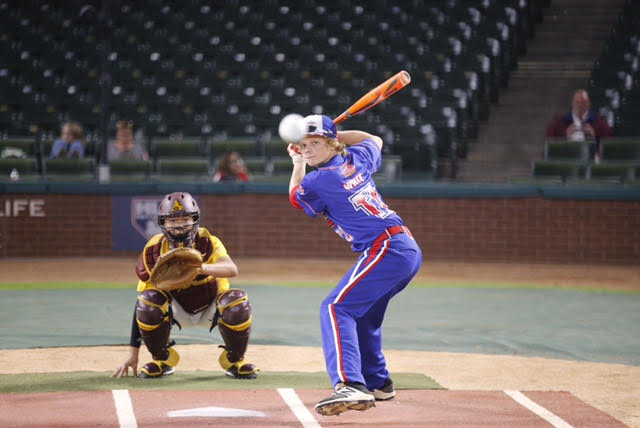
its the Indian not the arrow. I appreciate your help and instruction. The proof is in the pudding.”


 , he talks about a cotton candy like springy material that the bones and muscles float it, and what gives muscles their shape called fascia.
 ,
,



 . It’s NOT a roll over, it’s like a “waggle” that golfers use pre-swing. Great defender against off speed and breaking pitches, AND increase BA by controlling the barrel. Keep main objective in mind: hit ball as hard and far as you can. (about 3:45 mark)
 . He says hitters standing on one diagonal leg of the “X” encourages the springiness of fascia. He taught this to his 15yo daughter, who has hit over .600 the last couple years playing Fast-Pitch Softball in Texas, which is one of the hotbeds for both baseball and softball competition in the country. Oh and by the way, she also hit a half dozen homers as well.